The problem
The best small desk is not necessarily the narrowest one. It is the one that gives your work a defined home without making the rest of the apartment harder to use. A poorly chosen desk becomes a dumping ground for mail and laundry.
What to measure
Measure the desk width and depth, then measure the chair clearance behind it. A compact setup still needs room for knees, an outlet, and a clear walking path. Mark the footprint on the floor with painter’s tape for a full day before ordering. Check outlet proximity—you don’t want cables tripping you in a small room.
Comparison table
| Desk type | Best for | Trade-off | Renter fit |
|---|---|---|---|
| Writing desk | Simple laptop work and journaling | Limited storage | Strong all-rounder |
| Console desk | Living rooms and multi-use zones | May be shallow for a monitor | Good if depth is right |
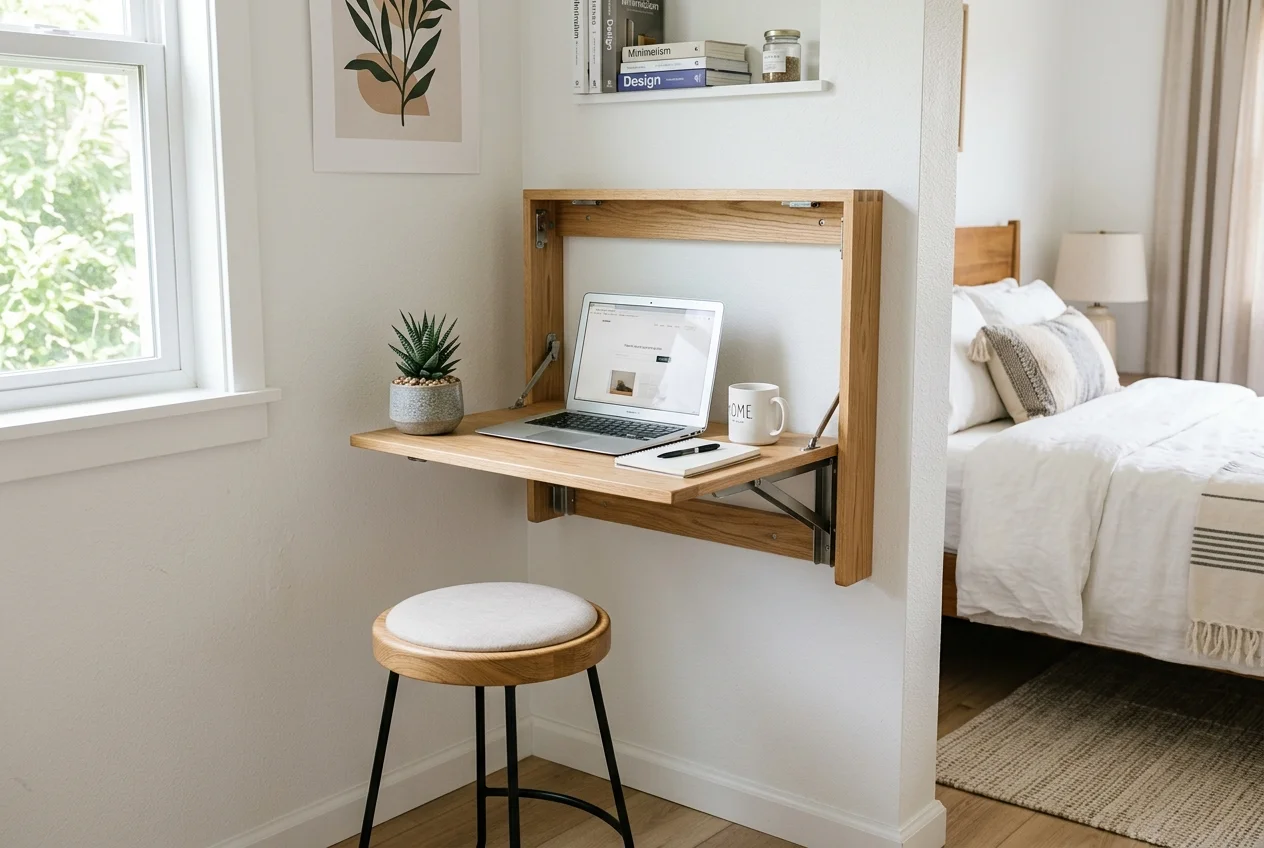
| Folding desk | Occasional work and shared rooms | Setup friction can reduce use | Excellent for flexibility |
| Wall-mounted desk | Maximum floor savings | Needs lease-approved attachment | Conditional; not always no-drill |
| Corner desk | Awkward nooks | Hard to reposition if you move | Great for specific layouts |
| Secretary desk | Hiding clutter at 5 PM | Can be bulky and expensive | Excellent for aesthetics |
A folding-desk example for a flexible room
The WOHOMO 31.5-inch folding desk is a useful example for a renter who needs a dedicated work surface but wants the option to fold it away. The listing positions it for small spaces, bedrooms, dorms, and apartments, making it relevant to a room that serves more than one purpose.
Do not choose it from the width alone. Measure the usable depth, chair pull-out space, knee clearance, and the storage spot for the folded desk. If you use a monitor, confirm the tabletop depth and load guidance before adding a stand or arm.
View the WOHOMO folding desk on Amazon (affiliate link)
Best option for different renters
- WFH full-time: A solid writing desk (at least 40” wide) with a dedicated monitor arm.
- Occasional/Hybrid: A console desk that doubles as an entryway table or vanity when not in use.
- Student/Creative: A secretary desk or writing desk with a hutch to keep supplies organized but out of sight.
- Tight studio: A folding desk that can be stashed under a bed or in a closet when guests come over.
Pros and limitations
Writing desks are versatile but lack storage. Console desks are sleek but often too shallow (under 20”) for a laptop plus a monitor. Folding desks are the ultimate space-savers but lack sturdiness for heavy typing. Wall-mounted desks save floor space but are terrible for renters who can’t drill into studs.
What to avoid
Avoid glass desks in high-traffic studio paths—they show every fingerprint and are fragile during moves. Avoid marketing that claims a 15-inch deep desk is “perfect for dual monitors” (it isn’t; your eyes will be too close to the screen). Avoid desks with built-in, unremovable shelving that dictates where your monitor must go.
Renter-safe cautions
Wall-mounted floating desks look amazing but require heavy-duty anchors or stud mounting. This usually means significant drywall repair upon move-out. Always check your lease for drilling restrictions before buying a floating desk. Stick to freestanding options if you want zero deposit risk.
Budget alternatives
- Under $50: Basic folding desks or very simple MDF writing tables. Good for a quick setup.
- Under $100: Small writing desks with maybe one drawer, or durable metal-framed compact desks.
- Under $200: Solid wood console desks, secretary desks, or compact L-shaped corner desks.
Related Home in Layers articles
- Small Home Office Layouts
- The Best Rolling Carts
- How to Choose Apartment Furniture
- Studio Apartment Zones
- Living Room Layout Ideas
Takeaway
Start with a simple freestanding writing desk or folding desk. It keeps your options open and avoids making a lease decision before you know the habit will last.
Explore More on Pinterest
Save this guide to your boards or check out our daily small-space styling ideas, renter-safe DIYs, and apartment resets.