Quick answer
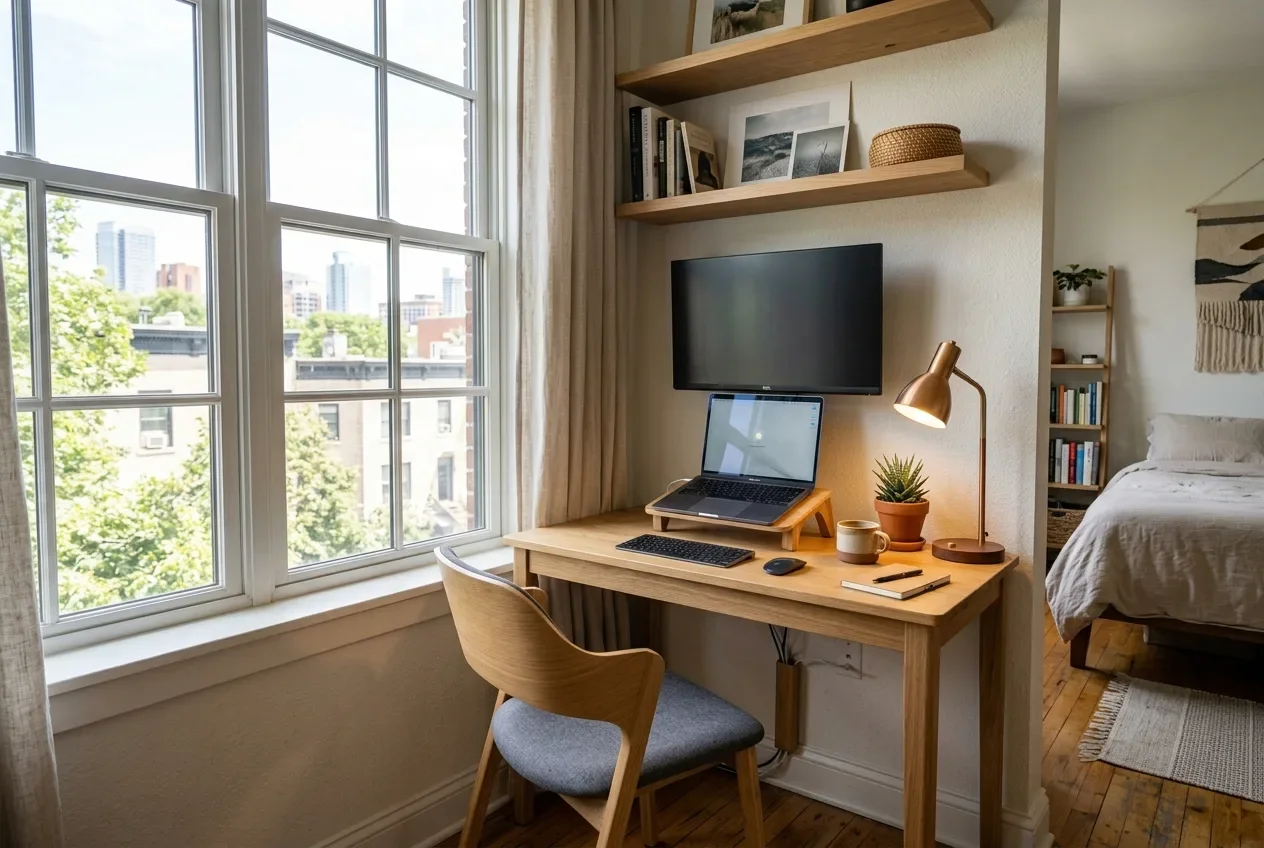
The best small home office layout places the desk facing a wall or window to minimize visual distraction, ensures 30-36 inches of clearance for the chair, and uses vertical space for storage to keep the footprint compact.
Who this is for
This guide is for renters trying to carve out a productive workspace in an apartment that wasn’t designed for one. Whether you are squeezing a desk into a bedroom corner, repurposing a closet, or trying to create a dedicated office in a small second bedroom, these layout principles will help you maximize focus and minimize clutter.
What to measure first
Before moving furniture or buying a new desk, grab your tape measure. You need to know:
- Wall space width: The exact width of the wall or alcove where you plan to put the desk.
- Chair clearance: You need a minimum of 30 inches (ideally 36 inches) from the edge of the desk to any other furniture (like a bed or sofa) to push your chair back comfortably.
- Door swings: Check that your desk and chair won’t block the swing of any entry doors or closet doors.
- Outlet locations: Note where the nearest outlets are so you can plan cable management without trailing cords across walkways.
Office-in-a-corner vs closet office vs dedicated room
The Corner Office
When your office shares a space with your living room or bedroom, boundary setting is critical.
- Use a rug to visually define the workspace.
- Choose a desk that matches the style of the surrounding room so it doesn’t look purely utilitarian.
- Tip: If possible, place the desk so you aren’t staring directly at your bed while working, which can blur the lines between rest and productivity.
The Closet Office (Cloffice)
If you have a spare closet, removing the doors and sliding a desk inside is an excellent way to save floor space.
- Ensure the desk depth allows you to sit comfortably without your knees hitting the back wall.
- You will need good lighting, as closets are naturally dark.
- Check your lease before removing doors; store them safely and remember to reinstall them before moving out.
The Dedicated Small Room
If you’re lucky enough to have a small second bedroom, don’t just push the desk against the longest wall.
- Consider floating the desk in the middle of the room facing the door (the “command position”). This makes the room feel like a true office.
- Use the walls for tall bookshelves to maximize storage without eating up floor space.
Desk placement: Facing the wall vs the window
| Placement | Best for | Watch out for | Rental score |
|---|---|---|---|
| Facing Wall | Maximum focus, tight spaces, easy cable management. | Can feel claustrophobic; poor background for video calls. | 10/10 |
| Facing Window | Natural light, pleasant view, good for mental breaks. | Screen glare, temperature fluctuations, potential distractions. | 8/10 |
| Floating (Facing Room) | Video call background control, executive feel. | Requires more floor space, tricky cable management to outlets. | 6/10 |
Tip label: To manage cables when floating a desk, use a cable management box and run a single extension cord under an area rug to the nearest outlet.
Lighting for video calls
Overhead apartment lighting is usually unflattering and casts harsh shadows. For video calls in a small space:
- Primary light: Place a soft, diffused desk lamp or a ring light directly behind your monitor, facing you.
- Fill light: If you have a window, position yourself so the natural light hits your face, not your back (which turns you into a silhouette).
- Background light: A small lamp on a shelf behind you adds depth to your video background and makes the space feel warmer.
Shared-room strategies
When sharing a home office with a partner or roommate in a small apartment:
- Zoning: Clearly define whose side is whose, even if it’s just a strip of tape inside a shared drawer.
- Acoustics: Soft materials absorb sound. Add an area rug, thick curtains, and upholstered chairs to reduce echo during simultaneous calls.
- Scheduling: If the space is too small for two people to work comfortably at the same time, coordinate your schedules so one person uses the living room or a coffee shop during the other’s focus hours.
End-of-day reset routine
In a small apartment, you can’t just close the door on a messy desk at 5 PM (especially if your desk is in your bedroom).
- Take 3 minutes at the end of every workday to clear coffee mugs, file papers, and neatly stack your laptop.
- This creates a psychological boundary between work time and personal time, which is essential when your home is your office.
Renter-safe cautions
- Always check your lease before removing closet doors for a “cloffice.”
- If mounting a monitor arm, ensure your desk can handle the weight (especially cheap particleboard desks, which can snap).
- Be careful with adhesive cable clips on painted walls; they can peel the paint when removed. Stick them to the back of the desk instead.
Budget alternatives
- Under $25: A simple monitor stand with storage underneath to reclaim desk space.
- Under $50: A clamp-on desk lamp to save surface area, plus a cable management tray that attaches under the desk.
- Under $100: A compact rolling cart to hold printer supplies and files, which can be tucked away in a closet after hours.
Common mistakes
- Buying a deep desk: In a small space, a desk deeper than 24 inches wastes valuable floor space. A 20-22 inch depth is usually plenty for a laptop and monitor.
- Ignoring vertical space: Don’t let the space above your desk go to waste. Use floating shelves or a tall bookcase.
- Choosing a bulky chair: “Executive” office chairs overwhelm small rooms. Look for a sleek, ergonomic task chair that can tuck fully under the desk.
- Poor cable management: A tangle of cords makes a small space feel instantly cluttered and stressful.
Recommended product
For a flexible work surface in a tight room, the WOHOMO 31.5-inch folding desk is a relevant product starting point. Confirm the desk depth, unfolded footprint, laptop clearance, weight rating, seller, price, and return terms before ordering. Home in Layers has not personally tested this product.
View the WOHOMO folding desk on Amazon (affiliate link)
Related Home in Layers articles
- Choosing the Right Renter-Safe Desks
- Living Room Layouts That Actually Work
- Creating Zones in a Studio Apartment
- How to Choose Apartment Furniture
Takeaway
A functional small home office is about smart clearances, strategic desk placement, and strict boundaries between work and life.
Explore More on Pinterest
Save this guide to your boards or check out our daily small-space styling ideas, renter-safe DIYs, and apartment resets.