The problem
When you live in a small apartment, your storage needs can change drastically from one room to another, and from one apartment to the next. Fixed shelving or bulky cabinets require a lot of commitment and often require drilling holes, which isn’t ideal for renters trying to protect their deposit. A rolling cart offers flexible, mobile storage that can adapt as your needs change without damaging any walls.
What to measure
Before adding a rolling cart to your cart, be sure to measure:
- Clearance width: For tight spots between a vanity and toilet, or a fridge and counter.
- Vertical clearance: Will it slide under a counter or desk? Measure from the floor to the lowest hanging obstacle.
- Item height: Measure the tallest items you plan to store (like olive oil bottles or tall shampoo pumps) to ensure they’ll fit between the tiers.
Comparison table
| Option | Best for | Watch out for |
|---|---|---|
| 3-Tier Wire Cart | General organization, craft supplies | Small items falling through the wire mesh without liners |
| Wood Butcher Block | Kitchen island alternative, heavy appliances | Weight limits on the lower shelves; moisture damage |
| Narrow/Slim Cart | Bathroom gaps, laundry room crevices | Tipping over if top-heavy or on plush carpets |
| Craft/Hobby Cart | Office supplies, flexible nightstand | Can look cluttered if not organized with bins |
A practical multi-room option
The DTK 3-Tier Metal Utility Rolling Cart is a useful example of the all-purpose cart category. It has three mesh trays, a wood-look top, side storage pockets, hooks, and locking casters, so it can move between a kitchen, bathroom, office, or living room. At roughly 18 inches wide, it is better suited to open floor space than to a narrow gap between fixtures.
Use the bottom tray for heavier items, measure your doorway and floor clearance first, and check the current color, price, delivery, and return details before buying. This is a product example based on the listed specifications; Home in Layers has not personally tested it.
Amazon affiliate disclosure: As an Amazon Associate I earn from qualifying purchases.
Best option for different renters
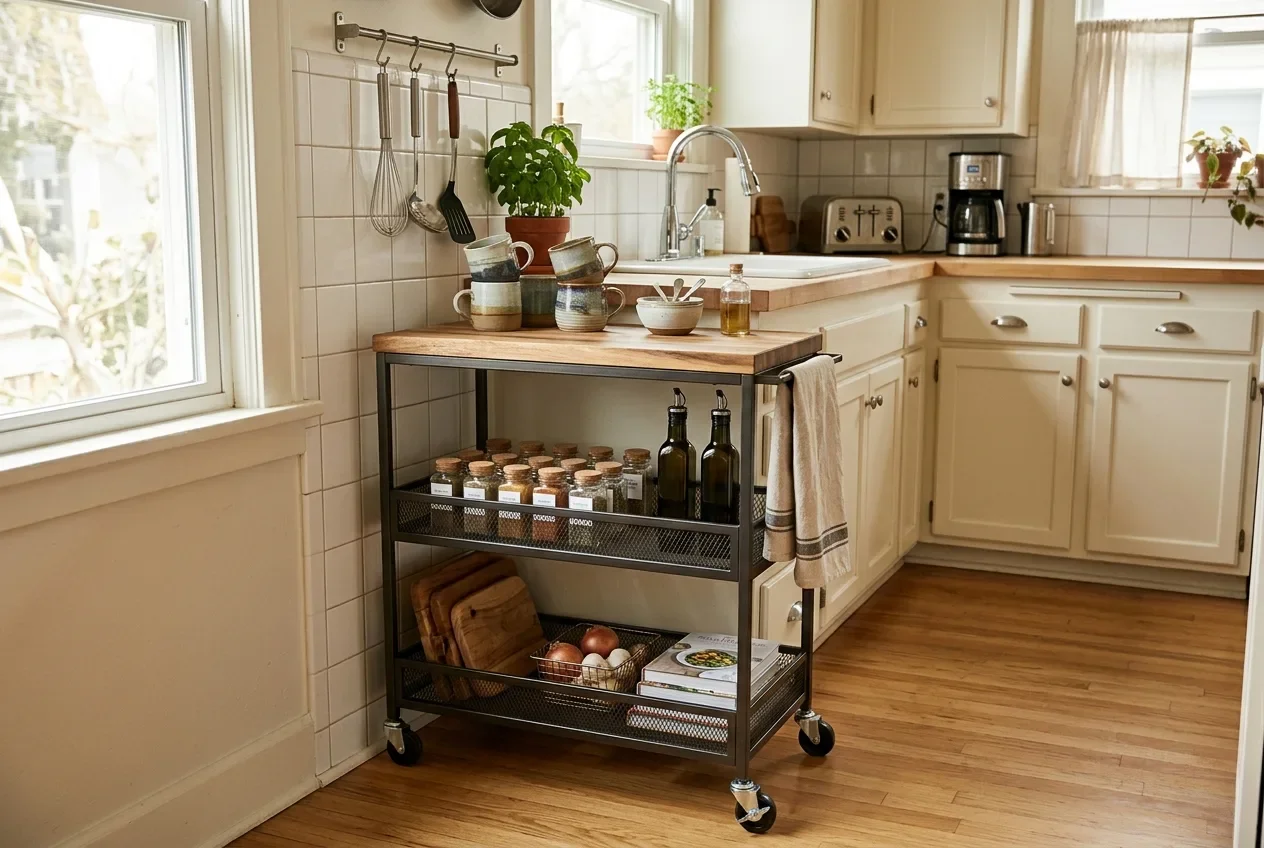
For the studio renter without a kitchen island: A wood-topped butcher block cart acts as a prep station. Look for one around 18-24” wide with sturdy locking casters. It doubles as a dining surface or bar cart when guests are over.
For the shared bathroom renter: A narrow, 10-12” slim cart can squeeze between the sink and the toilet. Give each roommate a tier, and easily roll it out for cleaning.
For the renter needing a flexible bedroom setup: A standard 3-tier metal cart makes an excellent nightstand alternative. It’s perfect for keeping a reading lamp, books, and chargers within reach, and can easily move if you rearrange the room.
Pros and limitations
The biggest advantage of a rolling cart is its mobility—it’s incredibly renter-safe. You can repurpose it endlessly (from a printer stand to a bar cart). However, their open shelving means that if you aren’t using bins or organizers, they can quickly look messy. Additionally, cheaper plastic models may bow under the weight of heavy books or appliances.
What to avoid
Avoid carts with plastic casters if you plan on moving them frequently or fully loading them—they will drag and potentially scratch your floors. Steer clear of “lightweight” carts claiming high weight capacities without specifying the limit per tier. Also, avoid fixed-shelf carts if you need to store items taller than 10-11 inches.
Renter-safe cautions
Rolling carts are inherently renter-safe as they require zero installation. However, be cautious of:
- Flooring damage: Heavy carts with cheap wheels can dent soft vinyl plank or scratch hardwood.
- Wall scuffs: Be careful when rolling them into tight gaps to avoid scuffing the paint.
- Stability: If you’re storing heavy items, place them on the bottom tier to prevent tipping.
Budget alternatives
- Under $35: Basic plastic or lightweight metal 3-tier carts. Great for lightweight bathroom items or craft supplies, but not ideal for heavy kitchen appliances.
- Under $75: Sturdy metal carts (like the popular IKEA Raskog) with decent casters and higher weight limits per shelf.
- Under $150: Wood-topped kitchen carts or heavy-duty utility carts with commercial-grade locking wheels.
Related Home in Layers articles
- Small Kitchen Storage Hacks
- No-Drill Bathroom Storage
- The Ultimate Guide to No-Drill Storage
- Desks for Small Spaces
- Building an Organization System
Takeaway
A sturdy rolling cart is one of the smartest investments a renter can make—it solves immediate storage problems today and will effortlessly adapt to whatever floor plan you move into next.
Explore More on Pinterest
Save this guide to your boards or check out our daily small-space styling ideas, renter-safe DIYs, and apartment resets.