The problem
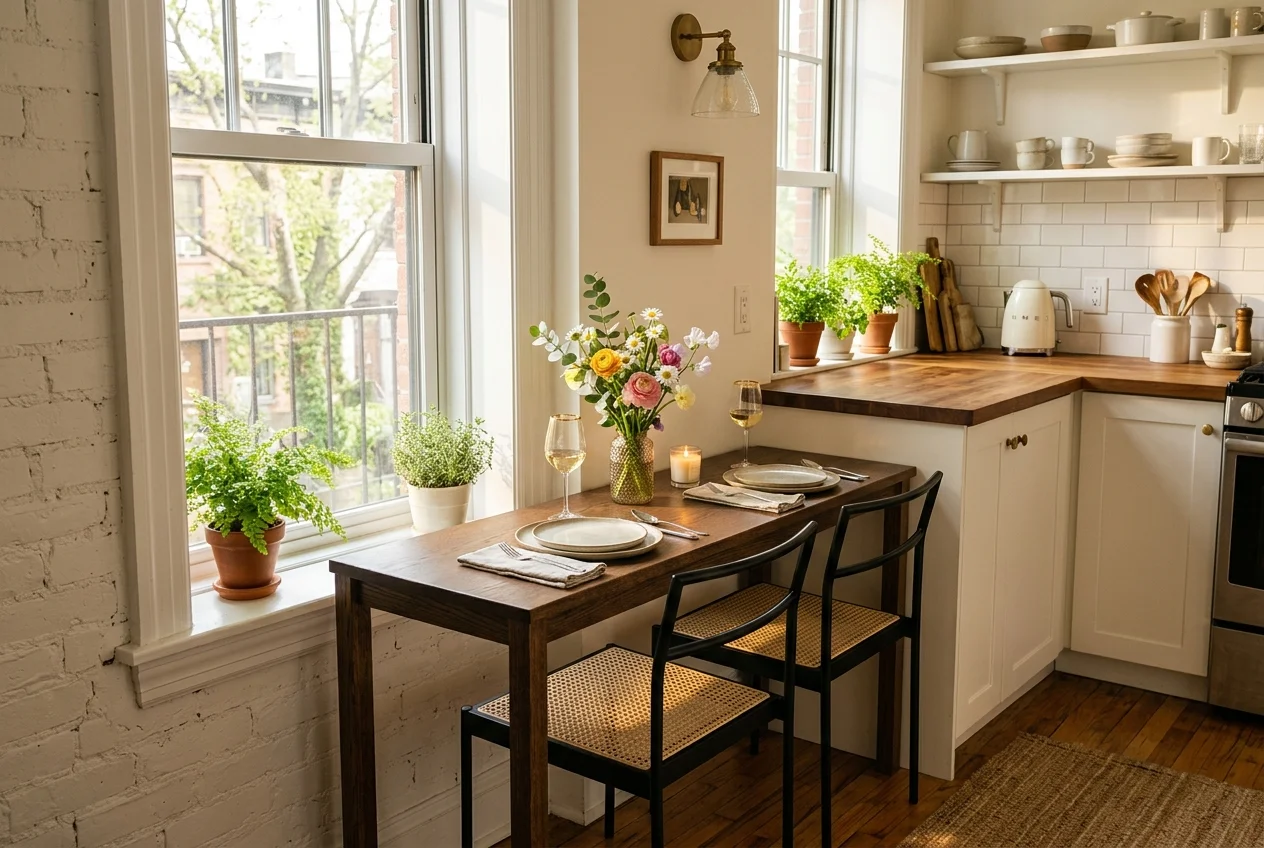
A dining table is a luxury in many small apartments. A standard table immediately eats up the floor plan, leaving no room to pull out a chair or walk past with groceries. The challenge is finding a table narrow enough to fit the space but functional enough to eat at comfortably.
What to measure
The magic number for a place setting is 15 inches of depth per person. For two people facing each other, you need a minimum table width of 30 inches, though 24 inches works for a casual side-by-side setup. Most importantly, measure 36 inches of clearance from the edge of the table to the nearest wall or obstruction so people can actually pull chairs out and sit down.
Comparison table
| Table Type | Width Range | Best for | Trade-off |
|---|---|---|---|
| Drop-leaf | 15” closed, 36”+ open | Flexibility, occasional hosting | Sometimes lacks legroom at the hinges |
| Console-to-dining | 18” closed, 60”+ open | Living rooms serving dual purpose | Expensive and heavy |
| Wall-mounted drop | 15” - 25” depth | Kitchen nooks, tiny studios | Permanent installation needed |
| Counter-height | 20” - 30” width | Doubling as kitchen prep space | Requires taller, specific stools |
| Round (Bistro) | 28” - 36” diameter | Awkward corners, 2 people | Less surface area than square |
Best option for different renters
- The host in a studio: A drop-leaf table. Keep it folded as a slim console against the wall for daily use, and open the leaves when friends come over.
- The kitchen-less cook: A narrow, counter-height table. Use it as a kitchen island for prep work standing up, and pull up stools for eating.
- The tight corner: A round 28-inch bistro table. The lack of corners makes it much easier to squeeze past in tight walkways.
Pros and limitations
Drop-leaf tables are incredibly versatile but the base can interfere with where you put your legs. Round tables flow better visually in small rooms, but a rectangular or square table can be pushed flush against a wall when not in use. Wall-mounted tables take up zero floor space but are terrible for renters because they require drilling into studs.
What to avoid
Avoid large pedestals on small round tables—they block chair legs from tucking in properly. Avoid standard dining heights (30”) if your main goal is to add kitchen prep space; get counter height (36”) instead. Avoid heavy glass tops, as they cannot be easily pushed aside when you need space for a home workout.
Renter-safe cautions
If you choose a wall-mounted drop-leaf table, be prepared to lose a chunk of your security deposit. They must be anchored directly into studs, which leaves substantial holes in the drywall upon move-out. A freestanding drop-leaf table provides the same folding benefit without the deposit risk.
Budget alternatives
- Under $100: Simple square pub tables or small round MDF bistro tables.
- Under $200: Basic wood drop-leaf tables or narrow counter-height metal/wood hybrids.
- Under $400: Expanding console-to-dining tables or solid wood mid-century round tables.
Recommended product
For a compact dining zone, the DONGMUWUJEE Expandable Narrow Dining Table is a relevant product starting point. Confirm the table depth, expanded and collapsed dimensions, assembly, seller, price, and return terms before ordering. Home in Layers has not personally tested this product.
View the DONGMUWUJEE Expandable Table on Amazon (affiliate link)
Related Home in Layers articles
- How to Choose Apartment Furniture
- The Best Rolling Carts
- Living Room Layout Ideas
- Studio Apartment Zones
- How to Choose a Small Sofa
Takeaway
In a small apartment, your dining table should either push flush against a wall or fold down when not in use. If it can’t do either, it will just be in your way.
Explore More on Pinterest
Save this guide to your boards or check out our daily small-space styling ideas, renter-safe DIYs, and apartment resets.