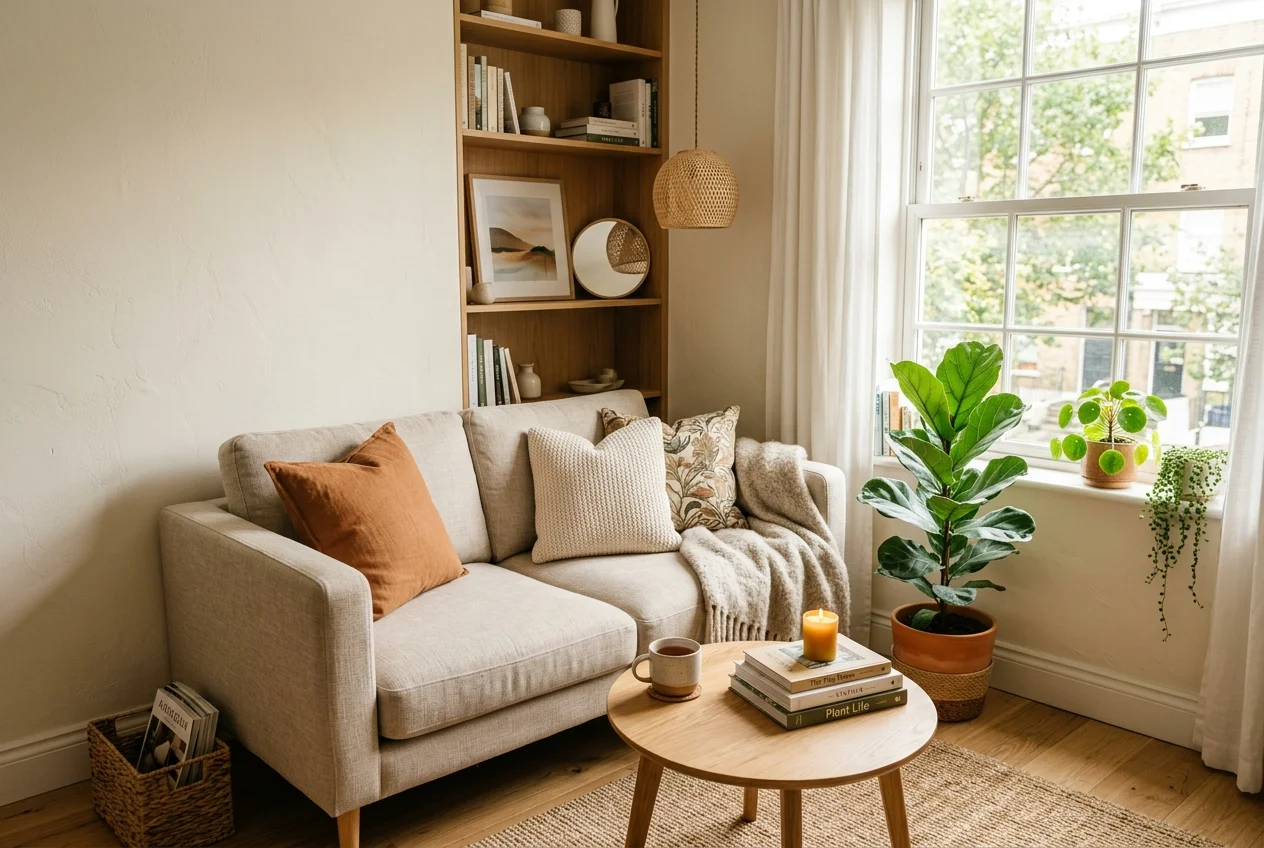
The problem
Renters frequently buy a sofa based on how it looks online, only to realize it physically cannot fit through the apartment hallway, or it completely swallows their 10x12 living room. In small spaces, every inch of width and depth dictates how the rest of the room functions.
What to measure
First, measure the delivery logistics: doorway widths, tight hallway corners, stairwells, and elevator doors. Then, measure the floor footprint. An apartment-size sofa is generally under 72 inches wide. Just as importantly, check the depth: standard sofas are 34-36 inches deep, but for tight apartments, a depth of 30-32 inches preserves crucial walking space.
Comparison table
| Sofa Type | Width Range | Best for | Trade-off |
|---|---|---|---|
| Loveseat | 48” - 60” | Small studios, tiny nooks | Only fits two people; no stretching out |
| Apartment Sofa | 65” - 74” | Standard 1-bedrooms | Usually narrower depth |
| Futon / Sleeper | 70” - 80” | Hosting guests in 1-beds | Harder cushions, bulky |
| Modular / Sofa in a box | Varies | Tight stairwells, frequent movers | Assembly required |
| Accent Chairs (x2) | 25” - 35” each | Maximum layout flexibility | No lying down |
Best option for different renters
- The frequent mover: Modular “sofa-in-a-box” options. They break down into manageable pieces and fit up any fifth-floor walk-up stairwell.
- The studio renter: A loveseat paired with a small ottoman that can double as a coffee table or a footrest.
- The host: An apartment-sized sleeper sofa or futon with track arms to maximize seating space while minimizing bulk.
A compact raised-leg loveseat example
The Serta Artesia 61-Inch Midcentury Modern Loveseat is a prime example of an apartment-scale sofa designed to make tight rooms feel larger. Its slim track arms maximize sitting width without hogging floor area, while its raised tapered wooden legs lift the sofa off the floor so light passes underneath—a proven trick to keep a small studio or living room from feeling crowded.
Before buying, measure your doorway clearance and living room footprint. At 61 inches wide and 32 inches deep, it easily maneuvers through narrow apartment hallways and stairwells while comfortably seating two adults.
View the Serta Artesia Loveseat on Amazon (affiliate link)
A convertible loveseat example
The Erament Convertible Loveseat Boneless Foldable Sofa Bed is a product example for a renter who wants a convertible sofa that folds flat into a guest bed. The listing describes a boneless foldable design suited for small spaces, studios, and apartments.
Because this is a larger purchase, verify the exact width, depth, height, seat dimensions, package size, delivery route, and return policy before ordering. A convertible sofa is helpful for overnight guests, but test the sleeping comfort yourself before relying on it long-term.
View the Erament Convertible Loveseat on Amazon (affiliate link)
Pros and limitations
Loveseats save space but prevent you from taking a nap. Modular sofas are easy to move but can look slightly blocky. Sofas with raised legs create visual space on the floor, making the room feel larger, but you lose the potential to hide storage bins underneath.
What to avoid
Avoid rolled arms. They can steal up to 10 inches of width from your room while providing zero extra seating. Stick to sleek “track arms.” Avoid dark, heavy fabrics in small, low-light rooms. Be skeptical of the label “apartment-size” in marketing; always check the exact dimensions in inches.
Renter-safe cautions
When moving a sofa into a rental, the biggest risk is to the drywall in the stairwell and the doorframe of your unit. Moving companies have insurance for this; if you do it yourself, wrap the sofa corners in moving blankets to avoid losing your deposit over a deep wall gouge.
Budget alternatives
- Under $300: Futons and very basic small loveseats. Expect firmer foam.
- Under $600: Many “sofa-in-a-box” brands and flat-pack apartment sofas.
- Under $1000: Custom-fabric apartment sofas or high-quality modular units with better foam density.
Related Home in Layers articles
- Living Room Layout Ideas
- How to Choose Apartment Furniture
- How to Choose the Right Rug
- Narrow Dining Tables
- Studio Apartment Zones
Takeaway
Track arms and raised legs are your best friends. They give you the maximum seating area while maintaining visual airiness in a tight living room.
Explore More on Pinterest
Save this guide to your boards or check out our daily small-space styling ideas, renter-safe DIYs, and apartment resets.