Quick answer
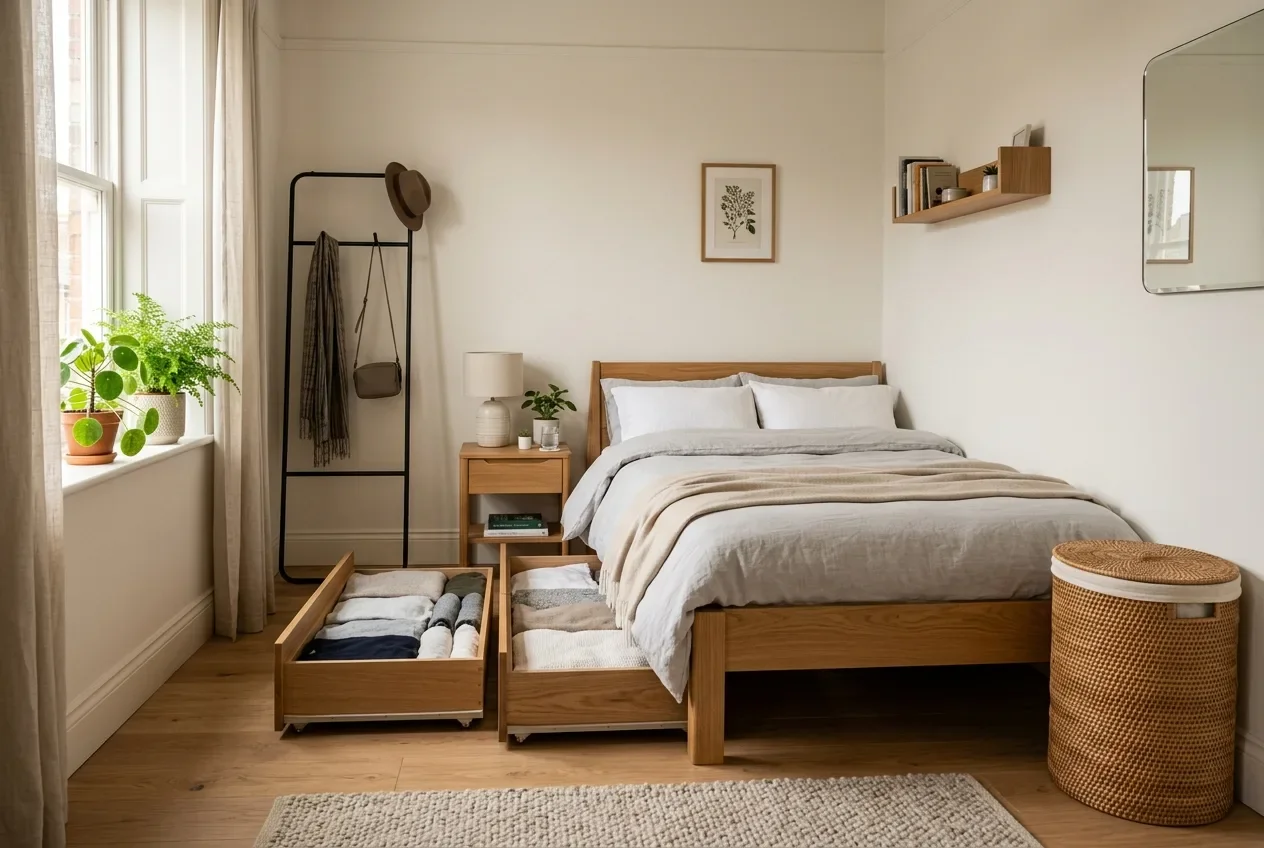
Reclaiming your bedroom floor requires editing your belongings first, utilizing vertical wall space with renter-friendly leaning ladders or tension rods, and creating a specific five-minute daily landing zone for in-transition items like worn clothes and pocket clutter.
Who this is for
This guide is for apartment renters whose bedrooms have become chaotic catch-alls due to tiny closets, lack of built-in storage, or awkward layouts. If your floor has disappeared under piles of clothes, shoes, and bags, this reset is for you.
What to measure first
Before buying a single bin or shelf, take these crucial measurements to avoid purchasing items that won’t fit your exact space:
- Closet dimensions: Measure the exact depth, width, and height of your closet, including the vertical clearance above the top shelf and the floor space beneath hanging clothes.
- Under-bed clearance: Measure the height from the floor to the bottom of the bed frame. Even half an inch makes a difference when sliding bins in and out.
- Available floor space: Measure the width of any blank wall space between doors, windows, and furniture.
The 5-step small bedroom storage reset
Storage works best when it respects how you actually move through the room. Start with the objects that cause friction every day, then give each one a home that is easy to reach.
1. Edit before you buy anything
Pull out the clothes, shoes, and spare bedding that are currently living on the floor. Sort them into keep, donate, repair, and “not sure.” The goal is not extreme minimalism; it is making functional space for the things you actually use.
Tip label: Implement the one-bag rule. Fill one donation or trash bag before you allow yourself to buy a new organizer.
2. Implement a seasonal rotation system
Small closets cannot hold four seasons of clothing at once. Divide your wardrobe into “current season” and “off-season.”
Store the off-season items in vacuum-sealed bags or slim, dust-proof fabric bins. These can slide under the bed or stack on the very top shelf of your closet. This instantly cuts the visual clutter in half and makes getting dressed easier.
3. Go vertical, but keep it light
In a rental, vertical storage can be as simple as a leaning ladder, a slim bookcase, or a tension rod inside the closet.
| Storage Option | Best for | Watch out for | Rental score |
|---|---|---|---|
| Leaning ladder | Blankets, scarves, next-day outfits | Can slide on hard floors | 10/10 |
| Over-door organizer | Shoes, accessories, cleaning supplies | Door closing clearance | 9/10 |
| Floating shelves | Books, small decor, folded knits | Wall anchor requirements | 7/10 |
Choose pieces that can move with you, and avoid the urge to cover every inch of wall space, which can make the room feel closed-in.
4. Optimize the closet floor
The floor space beneath hanging clothes is often a messy pile of shoes. Add a two-tier freestanding shoe rack or small modular drawers here. By establishing a rigid structure on the floor, you prevent items from spreading out into a disorganized pile.
5. Create a five-minute landing zone
Most bedroom clutter is a transition problem—items that aren’t quite clean enough for the closet but not dirty enough for the laundry.
Add a designated basket for worn-but-not-dirty clothes, install a single over-the-door hook for tomorrow’s outfit, and place a small tray on a dresser for items that leave your pockets.
Renter-safe cautions
- Wall-mounted shelves: Always check your lease before drilling. If you must install floating shelves, use proper drywall anchors to prevent them from ripping out of the wall under weight, and be prepared to patch the holes and touch up paint when you move.
- Adhesive hooks: Heavy coats or loaded bags can cause adhesive hooks to fail, tearing the drywall paper. Respect the weight limits stated on the packaging.
- Tension rods: Over-tightening a heavy-duty tension rod inside a cheap closet frame can crack the drywall or dent the framing.
Budget alternatives
- Under $25: Over-the-door hooks for robes and worn clothes, plus a set of identical slim velvet hangers to maximize closet rod space.
- Under $50: A set of breathable fabric under-bed storage bags and a slim, freestanding bamboo shoe rack for the closet floor.
- Under $100: A leaning storage ladder and a set of matching fabric storage bins for the top shelf of the closet to hide visual clutter.
Common mistakes
- Buying organizers before editing: Putting clutter into matching bins doesn’t solve the problem; it just hides it temporarily while taking up space.
- Filling all walls: Using every available wall surface for storage makes the bedroom feel like a cramped warehouse instead of a restful space.
- Complicated systems: If a storage system takes more than two steps to use (like unstacking three boxes to reach the one you need), you will likely leave the item on the floor instead.
Recommended product
For under-bed storage, the Lifewit 95L under-bed storage containers are a relevant product starting point. Confirm the container height, zipper and handle construction, moisture protection, exact pack, seller, price, and return terms before ordering. Home in Layers has not personally tested this product.
View the Lifewit under-bed storage containers on Amazon (affiliate link)
Related Home in Layers articles
- The Best Under-Bed Storage Options
- How to Organize a Small Apartment Closet
- Small Bedroom Layout Ideas
- How to Make a Small Bedroom Feel Bigger
- Building a Better Organization System
Takeaway
The best organizer is the one you can use with one hand at the end of a long, tiring day.
Explore More on Pinterest
Save this guide to your boards or check out our daily small-space styling ideas, renter-safe DIYs, and apartment resets.