Quick answer
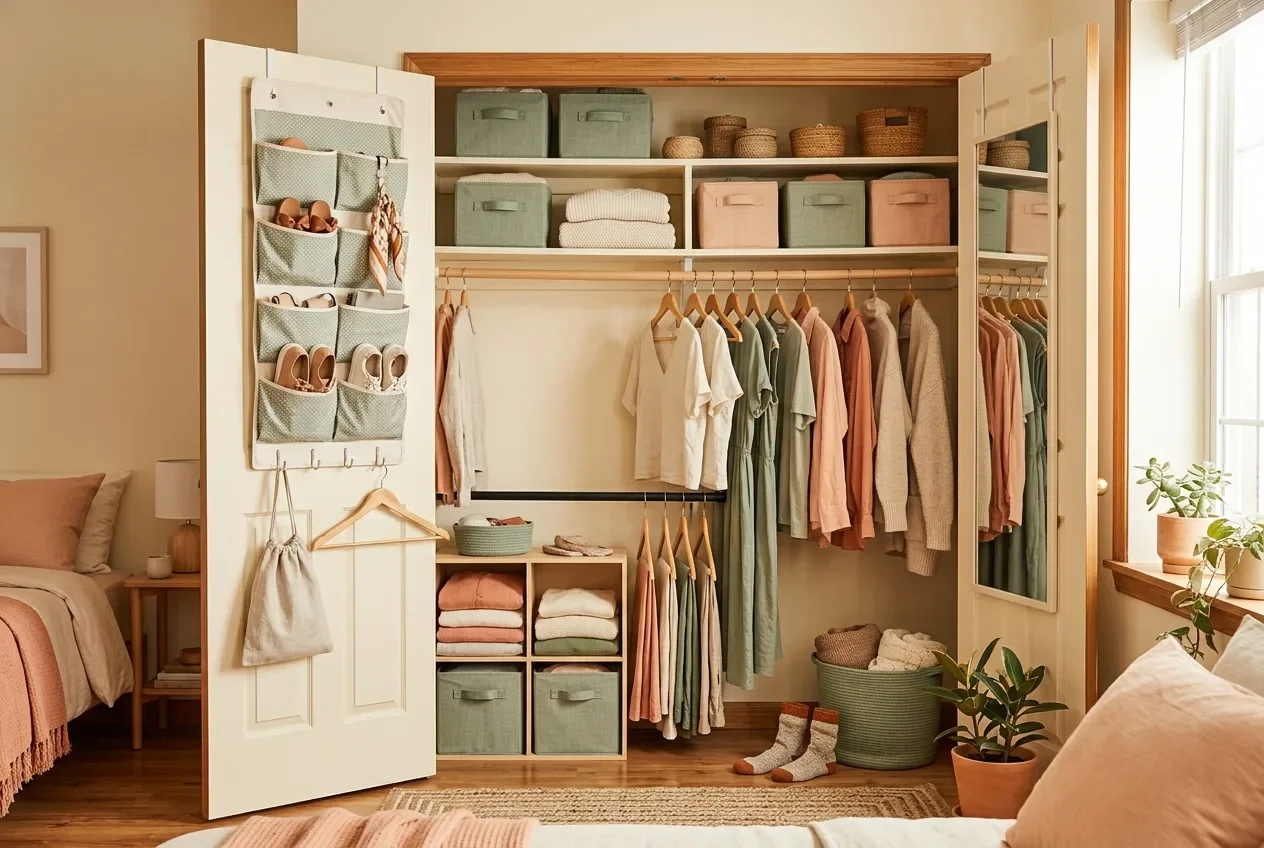
Make better use of your small closet’s vertical space by adding a hanging rod to create a second hanging tier, using shelf dividers to stack items neatly on the top shelf, and hanging an over-the-door organizer for shoes and accessories.
Who this is for
Renters dealing with standard, single-rod sliding or swing-door closets who need to maximize their wardrobe storage without installing permanent custom closet systems.
What to measure first
Measure your closet’s width, depth, and the height from the floor to the existing rod, as well as the height from the rod to the top shelf. Count the number of shelves and measure the clearance to the ceiling. Ensure you know if your doors are hinged or sliding, as over-the-door hooks won’t work on sliding doors.
Zone strategy (daily/weekly/seasonal)
Before organizing, divide your closet into zones based on access frequency.
- Daily: Eye-level items and mid-height drawers.
- Weekly: Lower hanging areas and accessible shelves.
- Seasonal: The highest shelves and under-bed storage.
Tip label: Store off-season clothes in vacuum-sealed bags on the very top shelf to compress their volume by up to 80%.
Tension rod doubling
Most closets only have one rod placed at about 65 inches high, wasting the space below short garments.
- Hang a sturdy tension rod or a commercially available closet doubler rod roughly 36 inches below the main rod.
- Use the top tier for shirts and blouses, and the bottom tier for pants or skirts.
An adjustable closet doubler rod example
The Whitmor Double Closet Rod hooks directly over your existing upper closet rod to instantly create a second hanging tier below short garments. Because it requires zero screws, tension mounting, or wall anchors, it is 100% renter-friendly. The width and height adjust smoothly to fit your specific closet dimensions.
Measure the distance from your main rod to the floor (you typically need at least 68 to 72 inches of clearance) to ensure your shirts on top and pants on the bottom can hang freely without dragging.
View the Whitmor Double Closet Rod on Amazon (affiliate link)
Shelf dividers
The top shelf of a rental closet is often one long, chaotic expanse.
- Use slide-on acrylic or wire shelf dividers to create distinct sections.
- These allow you to stack sweaters or jeans much higher without the piles tipping over.
Door-back organizers
If you have a hinged door, the back is prime real estate.
- Hang an over-the-door shoe organizer.
- You can also use pocket organizers to store belts, scarves, small purses, or even rolled t-shirts.
A hanging closet organizer example
The StorageWorks 6-Shelf Hanging Closet Organizer is a product example for renters who need vertical storage without adding a closet system. The listing describes six shelves that hang from your existing closet rod, making it useful for folded sweaters, jeans, bags, or lightweight household items.
View the StorageWorks Hanging Organizer on Amazon (affiliate link)
Treat the stated capacity as a product specification—not a target load for a rental door. Measure the door thickness, trim clearance, and space between the door and the wall before ordering. Load heavier items low, open and close the door slowly during the first week, and stop if the hooks bow, scrape, or prevent the latch from closing.
Matching containers and slim hangers
Visual consistency makes a small space feel less cluttered.
- Swap mismatched, bulky plastic hangers for ultra-slim velvet hangers. This single change can increase your hanging space by 30%.
- Use matching fabric or woven bins on the top shelf to hide visually noisy items like swimsuits or workout gear.
A slim non-slip hanger example
The Amazon Basics Slim Velvet Non-Slip Clothes Hangers replace bulky wooden or tubular plastic hangers with an ultra-thin profile that takes up less than a third of the width per garment. The soft velvet texture prevents silky tops, wide-neck sweaters, and delicate straps from slipping onto the closet floor.
When transitioning to slim hangers, convert an entire section at once to maintain a uniform hanging height, which immediately calms visual clutter in an open or reach-in rental closet.
View Amazon Basics Velvet Hangers on Amazon (affiliate link)
Capsule wardrobe basics for space
Sometimes the solution isn’t more storage, but fewer clothes.
- Adopting a capsule wardrobe approach means keeping a smaller, curated selection of versatile, interchangeable items.
- Rotate pieces seasonally to keep the active closet breathing room.
Renter-safe cautions
Do not attempt to unscrew the existing closet rod or shelves without written landlord permission, as you may strip the anchors or damage the drywall. Be cautious of overloading tension rods, which can bow and eventually collapse under too much weight.
Budget alternatives
- Under $25: Slim velvet hangers, basic over-the-door shoe organizers.
- Under $50: Closet rod doublers, slide-on shelf dividers.
- Under $100: Set of matching storage bins, vacuum storage bags, high-quality freestanding shoe rack.
Common mistakes
- Ignoring the door: Forgetting that hinged doors offer significant vertical storage potential.
- Keeping bulky hangers: Sticking with thick wooden or plastic hangers that eat up valuable horizontal space.
- Stacking without dividers: Creating leaning towers of sweaters on the top shelf that eventually tumble down.
Related Home in Layers articles
- Bedroom Storage Solutions
- Under-Bed Storage Ideas
- Building an Organization System
- First Apartment Checklist
- Bedroom Layout Tips
Takeaway
By adding a second hanging tier and utilizing the door and top shelf, you can dramatically expand your closet’s utility without making a single permanent change.
Explore More on Pinterest
Save this guide to your boards or check out our daily small-space styling ideas, renter-safe DIYs, and apartment resets.