Quick answer
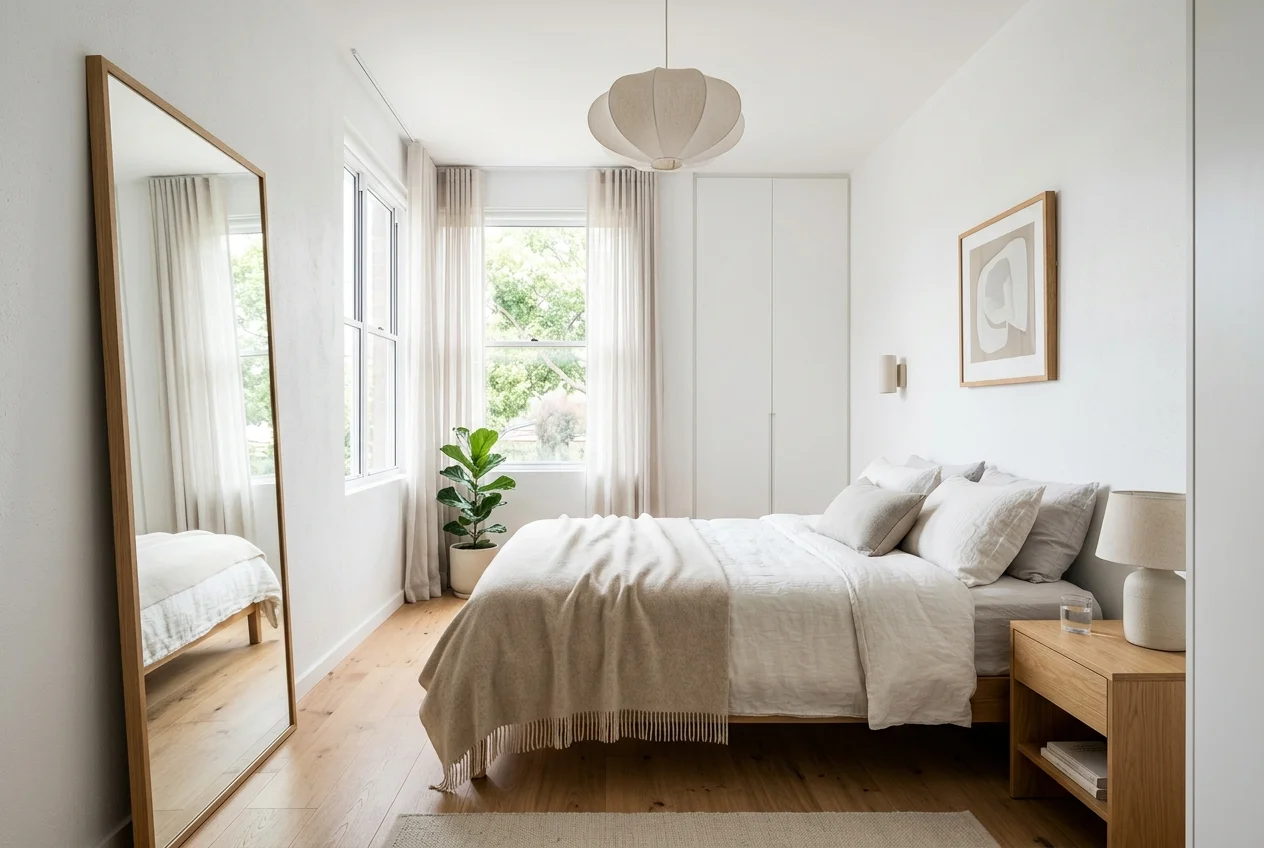
To make a small bedroom feel bigger, maximize natural light, use leggy furniture to keep the floor visible, hang curtains high and wide, and place a large mirror opposite a window to reflect light and create the illusion of depth.
Who this is for
Renters living in 10x10 or smaller bedrooms who feel boxed in by their furniture and want to create an airy, expansive feel without painting walls or changing the flooring.
What to measure first
Measure your floor dimensions, the width and height of your windows, and your bed frame. Determine how much exposed floor space you currently have—aim to clear at least 40% of the visible floor to reduce visual crowding.
Furniture scale and floor visibility
Heavy, blocky furniture shrinks a room.
- Choose furniture with visible legs (like a mid-century modern bed frame or nightstand) rather than pieces that sit flush on the floor.
- Seeing the floor extend under the furniture tricks the brain into perceiving more square footage.
- Consider see-through acrylic or glass bedside tables to reduce visual weight.
Lighting strategy
A single harsh overhead light makes a small room feel stark and defined by its corners.
- Layer your lighting: use a table lamp, a floor lamp, and perhaps plug-in wall sconces.
- Stick to warm bulbs (2700K - 3000K) to create a soft, blurring effect on the room’s boundaries.
Mirror placement
Mirrors are the oldest trick in the small-space book.
- Place a large, leaning floor mirror or hang a wall mirror directly opposite a window.
- This effectively acts as a second window, bouncing light around and doubling the visual depth of the room.
Curtain height and width
Standard apartment blinds can look cheap and confining.
- Hang curtains using a renter-safe tension rod or damage-free brackets.
- Hang the rod as close to the ceiling as possible, and extend it several inches past the sides of the window.
- This draws the eye upward, making the ceilings feel higher, and makes the window seem wider.
Color and bedding choices
You don’t have to paint your rental walls to control the color palette.
- Stick to light, solid colors or subtle patterns for your large textiles (bedding, rugs, curtains).
- A bulky, dark comforter will visually swallow a small room. Opt for a sleek, light-colored duvet.
Tip label: Match your bedding closely to your wall color to reduce visual contrast, which helps the bed blend into the room rather than dominating it.
Renter-safe cautions
When hanging heavy mirrors or curtain rods, always check the weight limits of removable adhesive hooks or use appropriate drywall anchors if your lease allows small nail holes (always spackle before moving out).
Budget alternatives
- Under $25: Warm LED bulbs, sheer white curtain panels, tension rods.
- Under $50: Lightweight acrylic nightstands, small plug-in wall sconces.
- Under $100: A large leaning floor mirror, a light-colored duvet cover.
Common mistakes
- Pushing the bed into the corner: While it seems space-saving, it often makes the room feel like a dorm; leave at least a few inches on both sides if possible.
- Oversized furniture: Squeezing a king-sized bed into a 10x10 room eliminates all walking paths.
- Cluttered surfaces: Having too many small decorative items on dressers creates visual noise that shrinks the space.
Recommended product
For reflecting light and adding a final outfit check, the Antok arched full-length floor mirror is a relevant product starting point. Confirm the mirror dimensions, stand or leaning requirements, delivery packaging, seller, price, and return terms before ordering. Home in Layers has not personally tested this product.
View the Antok full-length mirror on Amazon (affiliate link)
Related Home in Layers articles
- Bedroom Layout Tips
- Bedroom Storage Solutions
- Small Apartment Lighting Guide
- Curtains for Renters
- How to Choose an Apartment Rug
Takeaway
By manipulating light, lines, and leggy furniture, you can deceive the eye and make even the tiniest box of a bedroom feel like a spacious retreat.
Explore More on Pinterest
Save this guide to your boards or check out our daily small-space styling ideas, renter-safe DIYs, and apartment resets.