Quick answer
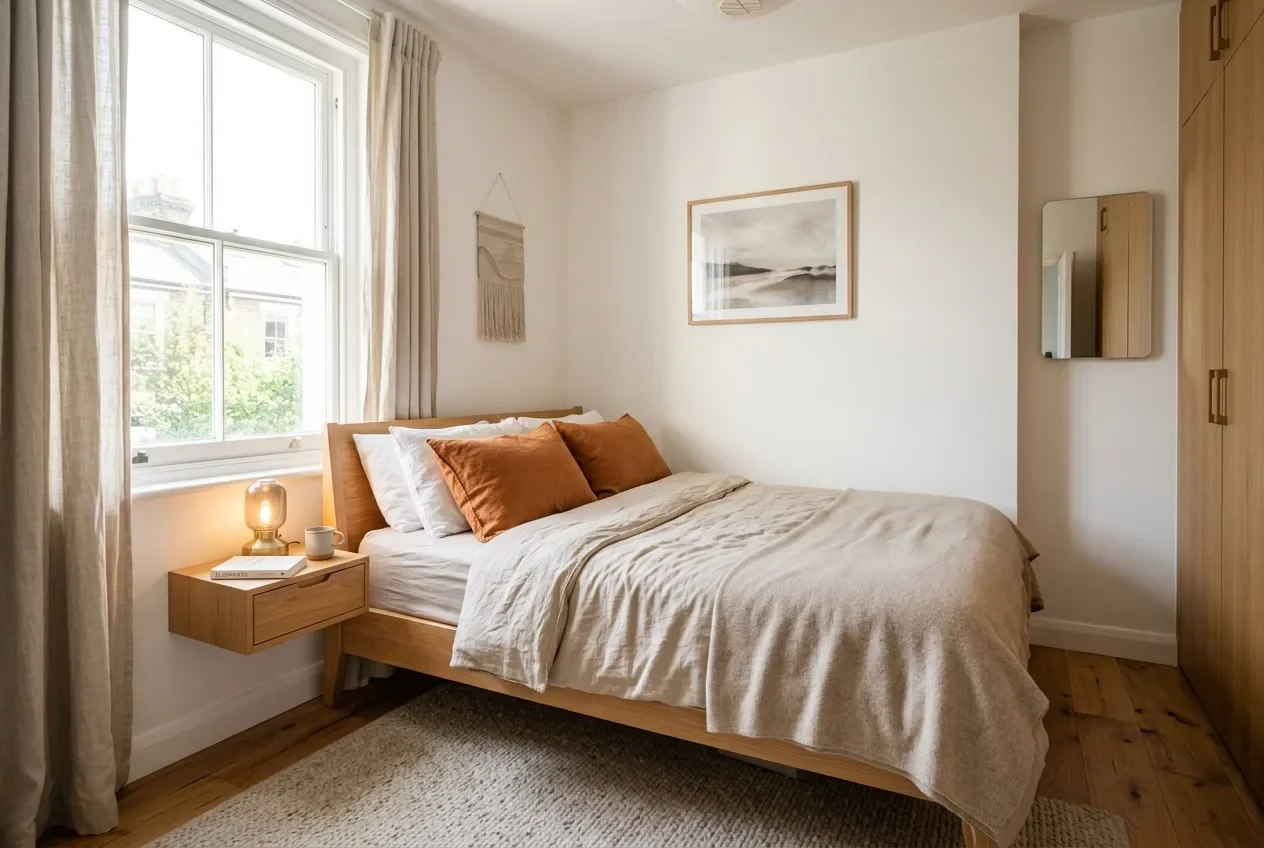
To make a small bedroom feel bigger, optimize your bed placement first, keep at least 24 inches of clearance around the bed, and swap bulky furniture for vertical storage or floating alternatives.
Who this is for
This guide is for apartment renters whose bedrooms barely fit a queen-sized bed, let alone a dresser and two nightstands. If you are struggling with a room under 100 square feet, weird alcoves, or closets with doors that hit your bed frame, these layout tweaks will help you reclaim your space.
What to measure first
Measurements dictate everything in a small bedroom. Before buying anything or moving heavy pieces, check:
- The exact dimensions of your mattress and frame (a standard Queen is 60” x 80”, but frames add inches).
- The clearance needed for closet doors and entry doors to swing fully open.
- The distance from the edge of the bed to the wall (you need a minimum of 24 inches to walk comfortably).
- The height of the windows to ensure headboards don’t block light.
Tip label: Tape out the footprint of potential furniture on the floor with painter’s tape before making any final decisions.
Bed Placement: Centered vs. Corner
The bed is the largest item in the room, so where it goes determines the rest of the layout.
Centered on the wall: This is the traditional hotel-style layout. It allows for two nightstands and makes the bed the focal point.
- Best for: Square rooms where symmetry is possible.
- Watch out for: Taking up all the floor space, leaving no room for a dresser.
Pushed into a corner: Pushing the bed against the wall on two sides opens up a massive amount of floor space in the center of the room.
- Best for: Very small rooms, single sleepers, or when you desperately need space for a desk or yoga mat.
- Watch out for: Making it difficult to make the bed and awkward for couples (someone has to climb over).
| Layout | Best for | Watch out for | Rental score |
|---|---|---|---|
| Centered | Symmetrical look, couples | Uses most floor space | 5/5 |
| Corner | Maximizing floor space, singles | Hard to make the bed | 5/5 |
Nightstand Alternatives
In a truly small bedroom, two standard 24-inch wide nightstands are a luxury you might not be able to afford. Instead of forcing them to fit, rethink bedside storage.
If you have 10-15 inches of space, look for narrow, tall accent tables or C-tables that can slide over the bed frame. If you have zero floor space, consider a headboard with built-in shelving (typically adding 6-8 inches of depth but saving width) or a renter-safe adhesive bedside shelf that sticks to the wall.
Strategic Mirror Placement
Mirrors are a renter’s best friend for faking square footage. The trick is placement. A large floor mirror leaning against a wall opposite a window will bounce natural light around and create the illusion of a deeper room.
If floor space is non-existent, use over-the-door mirrors or mount a large, lightweight acrylic mirror on the closet door using heavy-duty, renter-friendly adhesive strips (check weight limits carefully!).
Renter-safe cautions
When experimenting with bedroom layouts, be very careful not to block secondary exits (like windows) which is a major fire safety hazard and lease violation. If you are mounting mirrors or floating shelves above your bed, ensure you are using proper anchors or high-weight-capacity adhesive strips, and check if your lease forbids wall drilling. Falling decor is both dangerous and a surefire way to lose a deposit.
Budget alternatives
- Under $25: Removable adhesive bedside caddies that tuck under the mattress for storing your phone and glasses without needing a table.
- Under $50: A tension rod and a curtain panel to replace bulky closet doors that swing out and hit the bed (keep the original doors safe to reinstall later!).
- Under $100: Bed risers to lift your frame by 3-5 inches, giving you massive amounts of hidden storage space underneath for out-of-season clothing.
Common mistakes
- Ignoring vertical space: Letting the space above your dresser or bed go empty while clutter piles up on the floor.
- Choosing a bulky bed frame: A thick, upholstered sleigh bed can eat up an extra 6-10 inches of length compared to a sleek metal platform frame.
- Blocking the pathway: Placing furniture right at the entrance of the bedroom makes the room feel claustrophobic the moment you walk in.
Recommended product
For layouts that need more clearance under the bed, these bed risers are a relevant product starting point. Confirm the riser height, leg compatibility, weight rating, floor protection, seller, price, and return terms before ordering. Home in Layers has not personally tested this product.
View the bed risers on Amazon (affiliate link)
Related Home in Layers articles
- The Complete Renter-Friendly Apartment Decorating Checklist
- How to Choose Apartment Furniture
- Small Apartment Living Room Layout Ideas
- How to Decorate a Rental Apartment Without Losing Your Deposit
- How to Make a Studio Apartment Feel Separate
Takeaway
By keeping a strict 24-inch walking path and swapping bulky nightstands for vertical or floating options, even the smallest bedroom can feel open and restful.
Explore More on Pinterest
Save this guide to your boards or check out our daily small-space styling ideas, renter-safe DIYs, and apartment resets.