Quick answer
A lasting small-apartment organization system matches your natural habits by placing storage exactly where you drop items, using right-sized containers, and relying on regular, low-effort maintenance rather than complex filing rules.
Who this is for
This guide is for renters who feel like they are constantly cleaning up the same messes, only for their apartment to look chaotic again three days later. If you’re tired of “aspirational” organization that requires you to change your personality, this habit-first approach is for you.
What to measure first
Before you buy any bins or baskets, measure the reality of your space:
- Shelf depth and height: Measure the exact dimensions of the shelves you want to add bins to. Buying containers that overhang or don’t fit the height is a common waste of money.
- Under-bed clearance: Measure from the floor to the bottom of the bed frame.
- Door clearances: If you plan to use over-the-door hooks, ensure you have enough clearance between the top of the door and the frame.
The habit-first approach
The biggest mistake renters make is buying storage bins and then trying to force their behavior to match the bins. Instead, spend one week observing your friction points.
- Where do your keys naturally land?
- Where does the mail pile up?
- Where do clothes end up when they aren’t dirty enough for the hamper but not clean enough for the closet?
Build your system around these habits. If you always drop your keys on the kitchen counter, put a nice tray right there. Don’t put a key hook by the door if you never use it.
Zone mapping
Divide your small apartment into functional zones rather than just rooms.
- Entry Drop Zone: A dedicated spot for keys, mail, sunglasses, and bags the second you walk in. A small console table or a wall-mounted organizer works perfectly.
- Kitchen Prep Zone: Store your most-used utensils, spices, and cutting boards right next to the stove, not across the kitchen.
- Laundry Zone: Keep the hamper where you actually undress, not necessarily in the bathroom or closet if that’s not where you take your clothes off.
- Bedside Zone: A nightstand with a drawer or a small basket to hide chargers, books, and lip balm to keep the surface clear and calming.
Container strategy
Containers are the building blocks of organization, but they need to be chosen wisely.
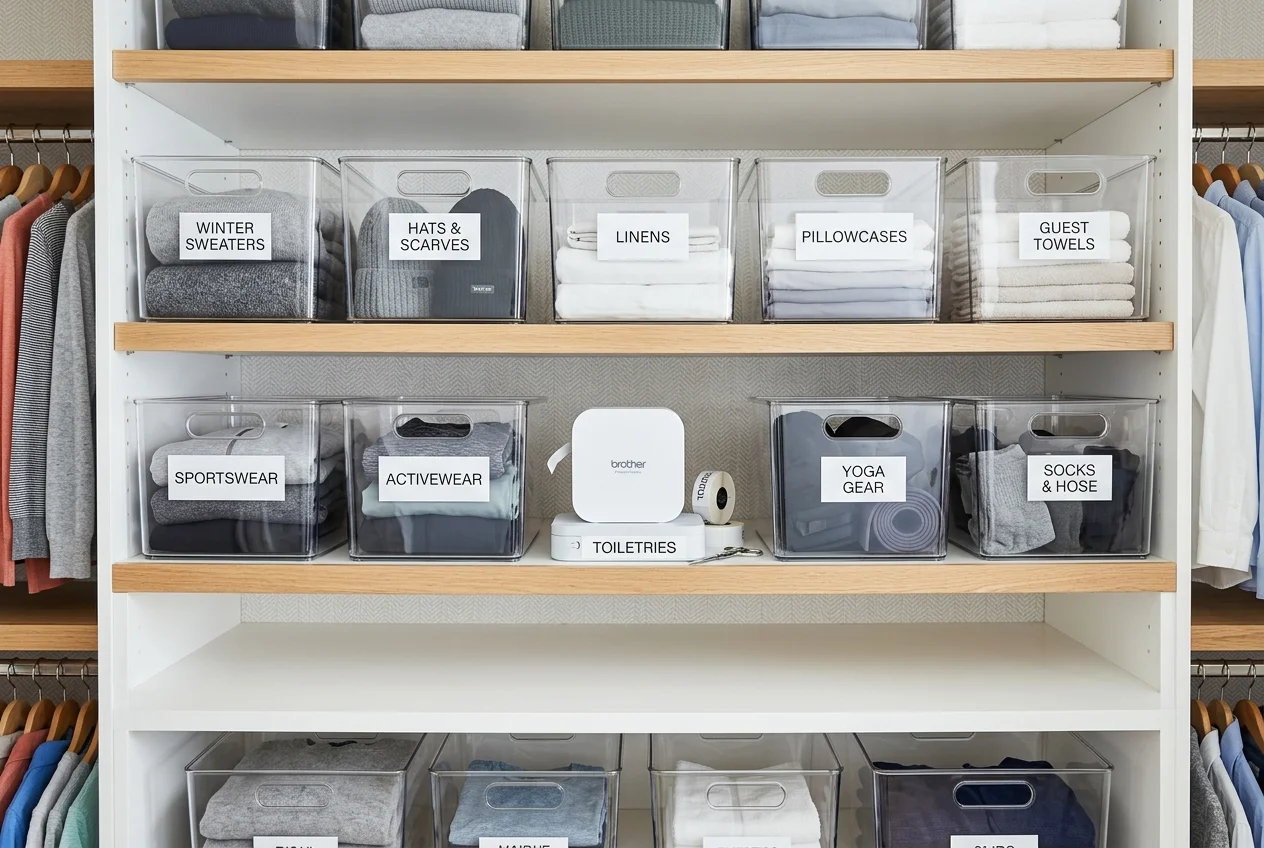
- Matching sets: In a small apartment, visual clutter is as bad as physical clutter. Using matching bins (e.g., all white or all woven) instantly makes open shelving look intentional.
- Labels: Label bins, especially if they are opaque. This prevents you from digging through three boxes to find one item.
- Right-sized: Don’t put tiny items in a huge bin; they will get lost. Use small dividers inside larger bins.
One-in-one-out rule
In a small apartment, you have a finite amount of space. You cannot continuously bring things in without taking things out. Adopt the one-in-one-out rule: if you buy a new sweater, an old sweater has to be donated. If you buy a new coffee mug, an old one must go.
Weekly 15-minute reset
No system is perfect, and life gets messy. Schedule a 15-minute reset every week (e.g., Sunday morning).
- Put away the clean laundry.
- Sort the mail pile.
- Clear the kitchen counters.
- Put rogue shoes back in the closet. This prevents the mess from reaching a critical, overwhelming mass.
Seasonal edit
Every six months, do a deeper edit of your apartment.
- Put away out-of-season clothing in under-bed storage to free up closet space.
- Review your pantry and throw out expired food.
- Assess your decor and put away items that feel cluttered.
Why systems fail
- Too complex: If it takes three steps to put away a pen, you will just leave the pen on the counter. Make putting things away easier than taking them out.
- Wrong location: Storing daily-use items on a high shelf or in a back closet guarantees they will never be put back.
- Aspirational not actual: Organizing for the person you want to be (who files every receipt immediately) instead of the person you are (who tosses receipts in a bowl) leads to failure.
Renter-safe cautions
- Avoid drilling into walls for heavy shelving unless you are prepared to patch and paint. Use freestanding shelving or tension rods instead.
- If using over-the-door organizers, apply felt pads to the back to prevent them from scratching the landlord’s paint when the door moves.
- Heavy command hooks can pull off drywall paper. Use them judiciously and follow the removal instructions perfectly.
Budget alternatives
- Under $25: A set of drawer dividers to instantly organize a junk drawer or clothing drawer.
- Under $50: A set of matching, stackable clear bins for the pantry or bathroom under-sink area.
- Under $100: A slim rolling cart that can slide between the fridge and the counter for extra pantry storage.
Common mistakes
- Buying storage before decluttering: You end up organizing trash. Always purge first.
- Ignoring vertical space: Failing to use the space above cabinets or doors wastes valuable real estate.
- Using opaque bins for everything: If you can’t see what’s in it (and it’s not labeled), it essentially ceases to exist.
- Forgetting the “junk drawer” is okay: Everyone needs one messy drawer. Just contain the mess to that one specific spot.
Recommended product
For a repeatable small-apartment labeling system, the DYMO LabelManager Portable Label Maker is a relevant product starting point. Confirm the label tape size, battery type, included tape, seller, price, and return terms before ordering. Home in Layers has not personally tested this product.
View the DYMO Label Maker on Amazon (affiliate link)
Related Home in Layers articles
- Maximizing Small Bedroom Storage
- Small Closet Organization Hacks
- Storage Solutions for Tiny Kitchens
- First Apartment Setup Checklist
- Best No-Drill Storage Solutions
Takeaway
The best organization system doesn’t rely on willpower; it relies on smart placement that makes putting things away the path of least resistance.
Explore More on Pinterest
Save this guide to your boards or check out our daily small-space styling ideas, renter-safe DIYs, and apartment resets.