Quick answer
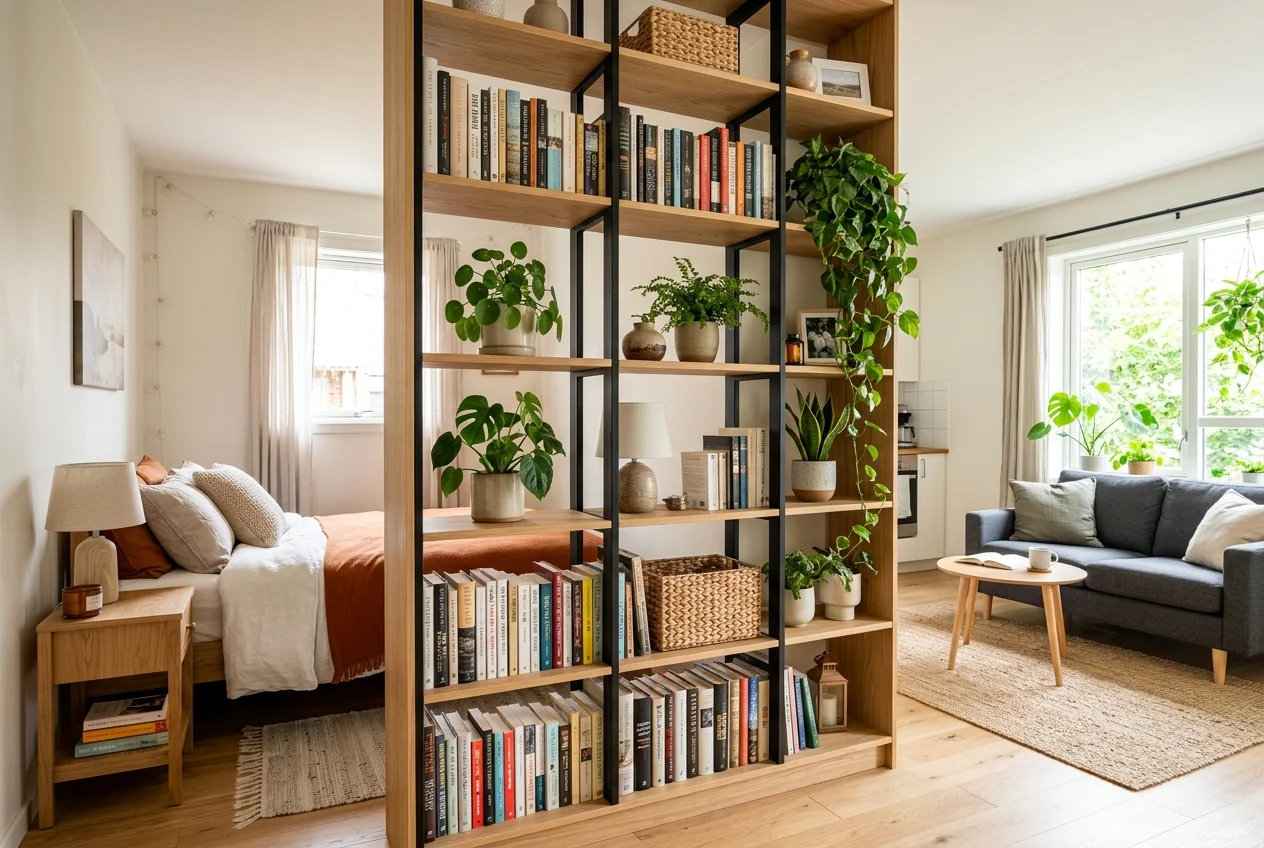
To safely divide a studio apartment, use freestanding open bookshelves, tension-rod curtains, tall houseplants, or folding screens that define separate zones without requiring drilling or blocking natural light.
Who this is for
Studio apartment renters who want to create a distinct separation between their sleeping and living areas without doing any construction, damaging the walls, or making the space feel dark and claustrophobic.
What to measure first
Measure the width of the space you want to divide, ensuring you leave at least 36 inches for a clear, safe walking path (egress). Measure your ceiling height for tension rods, and evaluate the primary light source to ensure your divider won’t cast the rest of the apartment into shadow.
Comparison of Divider Types
| Option | Best for | Watch out for | Rental score |
|---|---|---|---|
| Open Bookshelf | Storage + partial privacy | Can be heavy and a tipping hazard | 9/10 |
| Tension Rod Curtain | Soft division + total privacy | High ceilings require heavy-duty rods | 8/10 |
| Folding Screen | Instant setup + easy moving | Can be easily knocked over | 10/10 |
| Console Table | Low-profile zoning | Provides zero visual privacy | 10/10 |
| Tall Plants | Adding life + texture | Maintenance and watering needs | 9/10 |
Open shelving
An open-backed bookshelf (like the classic IKEA Kallax) is the holy grail of studio dividers.
- It provides substantial storage while still allowing light and air to pass through.
- Alternate filling the cubbies with solid bins and decorative items to control how much you can see through it.
Curtains on tension rods
For a softer look that can be easily “opened” to combine the space.
- Use a heavy-duty floor-to-ceiling tension rod system.
- Opt for semi-sheer curtains if you only have one window, ensuring the bed area still gets morning light.
Folding screens
The traditional room divider is making a modern comeback.
- Lightweight and requires zero installation.
- Choose screens made of rattan, rice paper, or slatted wood for a visually light footprint.
Tip label: Place a heavy potted plant or an armchair against the base of a folding screen to give it more stability in a high-traffic area.
Anchoring without wall damage
If you use tall, heavy furniture like a wardrobe as a divider, safety is a concern.
- Because you cannot anchor it to a wall (since it’s perpendicular in the middle of the room), ensure the base is heavy and stable.
- Keep heavy items in the bottom drawers. Never use tall, narrow, top-heavy units as freestanding dividers.
Fire safety and egress paths
Safety first: never block your direct path from the bed to the front door or fire escape. Local fire codes usually require a minimum clear pathway of 36 inches. Avoid placing flammable items (like sheer curtains or dry plants) near space heaters or radiators.
Budget alternatives
- Under $25: Large inexpensive sheer curtains, DIY PVC pipe tension frames.
- Under $50: Basic paper folding screens, low console tables found thrifted.
- Under $100: Open-cube shelving units, high-quality adjustable room divider tension rods.
Common mistakes
- Blocking the only window: Creating a solid wall that leaves half the studio in complete darkness.
- Ignoring the back of furniture: Using a standard dresser as a divider and exposing the ugly, unfinished particle board back to the living room.
- Overcrowding the space: Adding a thick, heavy divider in a 300 sq ft studio makes it feel like two tiny closets instead of one cozy apartment.
Recommended product
For rental-safe visual separation, this adjustable no-drill room-divider rod is a relevant product starting point. Confirm the height and width range, curtain weight, surface compatibility, pressure points, seller, price, and return terms before ordering. Home in Layers has not personally tested this product.
View the adjustable room-divider rod on Amazon (affiliate link)
Related Home in Layers articles
- Studio Apartment Zones
- Curtains for Renters
- Living Room Layout Tips
- How to Choose Apartment Furniture
- Small Apartment Lighting Guide
Takeaway
The ideal studio divider balances privacy with light flow, using renter-friendly tension, weight, or strategic placement to define your home’s layout.
Explore More on Pinterest
Save this guide to your boards or check out our daily small-space styling ideas, renter-safe DIYs, and apartment resets.