The problem
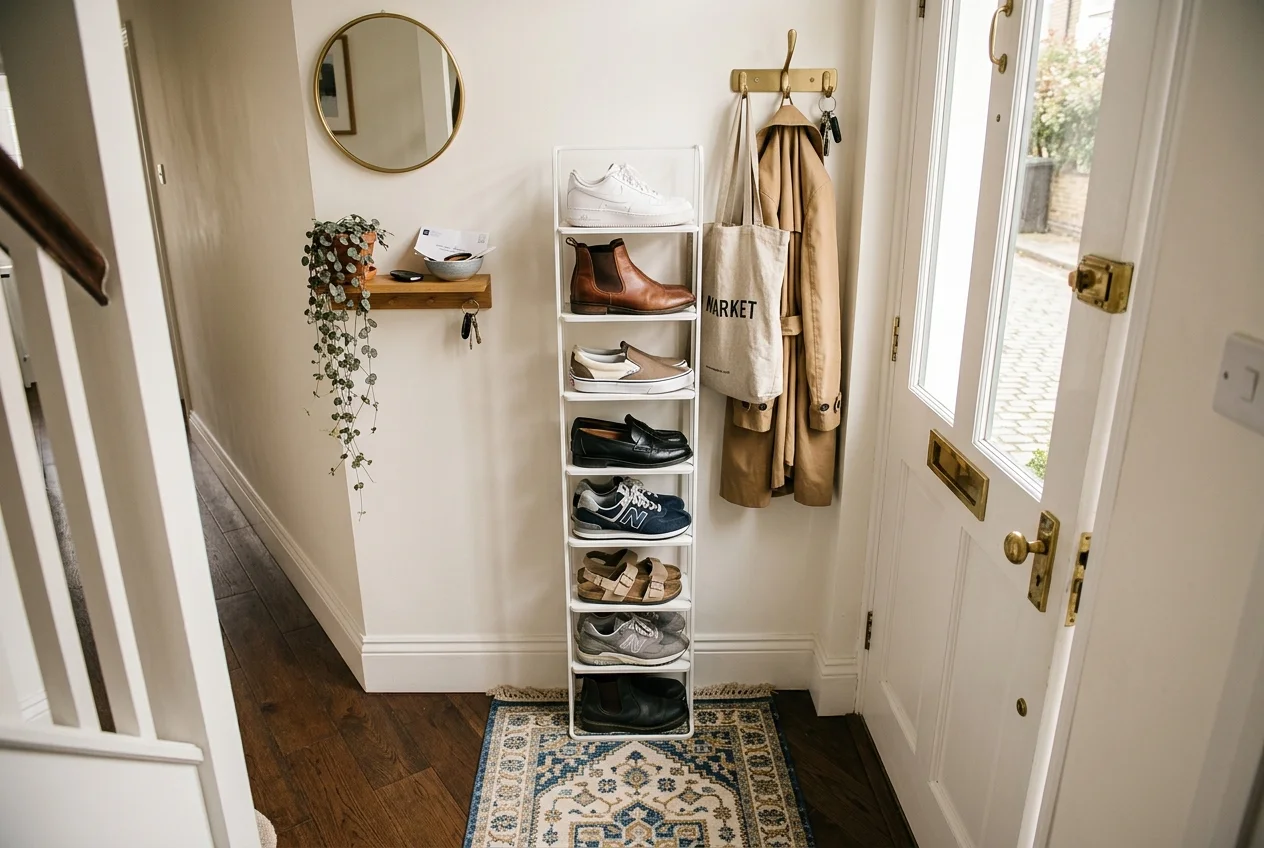
Shoes multiply quickly in a small apartment entryway. Pairs left by the door create a trip hazard, narrow the walking path, and make the first few feet inside the home feel permanently unfinished.
Quick solution
Keep only the shoes used this week near the door, measure the clear space beside the door, and choose an open rack that fits without reducing the exit path. Put everyday pairs on the lowest, easiest-to-reach tiers and move seasonal pairs to a closet or under-bed storage.
When should you use entryway shoe storage?
Use a rack when shoes repeatedly collect by the door and you have a stable spot outside the door swing. Choose a closet organizer instead when the entry is too narrow, the doorway is part of an emergency route, or an open rack would make the space harder to clean.
What to measure first
Measure the width and depth available beside the door, then open the door fully and mark its swing. Keep the rack out of the latch path and leave enough walkway for bags, guests, and move-out day. Count the pairs you actually wear each week instead of buying for an imaginary wardrobe.
Examples by entryway type
| Format | Best for | Trade-off |
|---|---|---|
| Open rack | Everyday shoes and quick access | Shoes stay visible |
| Closed cabinet | A calmer, concealed entry | Usually deeper and heavier |
| Over-door organizer | Closets or hinged doors | Not suitable for every door |
| Bench with storage | Sitting down to put shoes on | Uses more floor area |
A compact open-rack example
The HDDTTZ Expandable Adjustable 3-Tier Shoe Rack is a practical example for a renter who wants an open landing spot without adding a permanent cabinet. The listing describes an expandable, adjustable three-tier design intended for closets, entryways, and apartments.
Check the assembled width range, depth, shelf spacing, material, and stated capacity before ordering. Keep heavier shoes on lower tiers, do not let the rack narrow the exit route, and anchor or reposition it if it wobbles. A small open rack is useful only when the number of shoes matches the available capacity.
View the HDDTTZ Shoe Rack on Amazon (affiliate link)
A wall-mounted accordion peg rack example
The AMAPON Natural Wood Expandable Accordion Wall Hanger Peg Rack pairs with your shoe rack to keep bags, jackets, dog leashes, and hats from ending up dumped on top of the shoes or on the floor. Its expandable accordion design allows you to customize the width to fit narrow entryway wall niches, and its natural pine finish adds warm organic texture to a rental foyer.
When installing in a rental, mount it using heavy-duty damage-free adhesive strips or standard small picture-hanging nails that leave barely perceptible pinpricks, well outside the swing path of your front door.
View the AMAPON Accordion Peg Rack on Amazon (affiliate link)
A simple entryway reset
- Keep only the pairs used this week near the door.
- Put seasonal or occasional shoes in the closet or under-bed storage.
- Give keys, bags, and mail a separate landing spot so the shoe rack does not become a general dumping zone.
- Recheck the walkway after a week and reduce the rack’s contents if the path feels tight.
Renter-safe cautions
Avoid drilling into the entry wall for a rack that can stand on the floor. Keep the unit away from heater vents, damp exterior doors, and narrow emergency exit paths. Use felt pads under feet where needed to protect rental flooring.
Troubleshooting
- The rack blocks the door: Rotate it, move it to a closet, or switch to an over-door organizer only after checking the door thickness and trim clearance.
- It tips or wobbles: Recheck assembly, put heavier footwear on the bottom, and reposition the rack on a level surface. Do not leave an unstable rack in a main walkway.
- It overflows: Set a one-week capacity limit and move infrequently worn shoes to closed storage instead of buying a taller unit automatically.
Best practices
Keep the rack close enough to use but outside the door swing, clean the floor beneath it regularly, and leave a small separate landing spot for keys and bags. In shared apartments, assign each person a shelf or pair limit so the system remains predictable.
Privacy and lease note
You do not need to submit personal details or photos to use this guide. Retailer visits are governed by the retailer’s privacy policy. A freestanding shoe rack is usually reversible, but do not attach or anchor it to walls, doors, or trim without checking your lease and building rules.
Related Home in Layers articles
- How to Build a Small-Apartment Organization System
- Small Closet Organization
- Under-Bed Storage
- How to Choose Furniture for a Small Apartment
- First Apartment Checklist
Takeaway
The best entryway shoe solution is the smallest one that keeps the walking path clear and makes the daily pair easy to put away.
Explore More on Pinterest
Save this guide to your boards or check out our daily small-space styling ideas, renter-safe DIYs, and apartment resets.