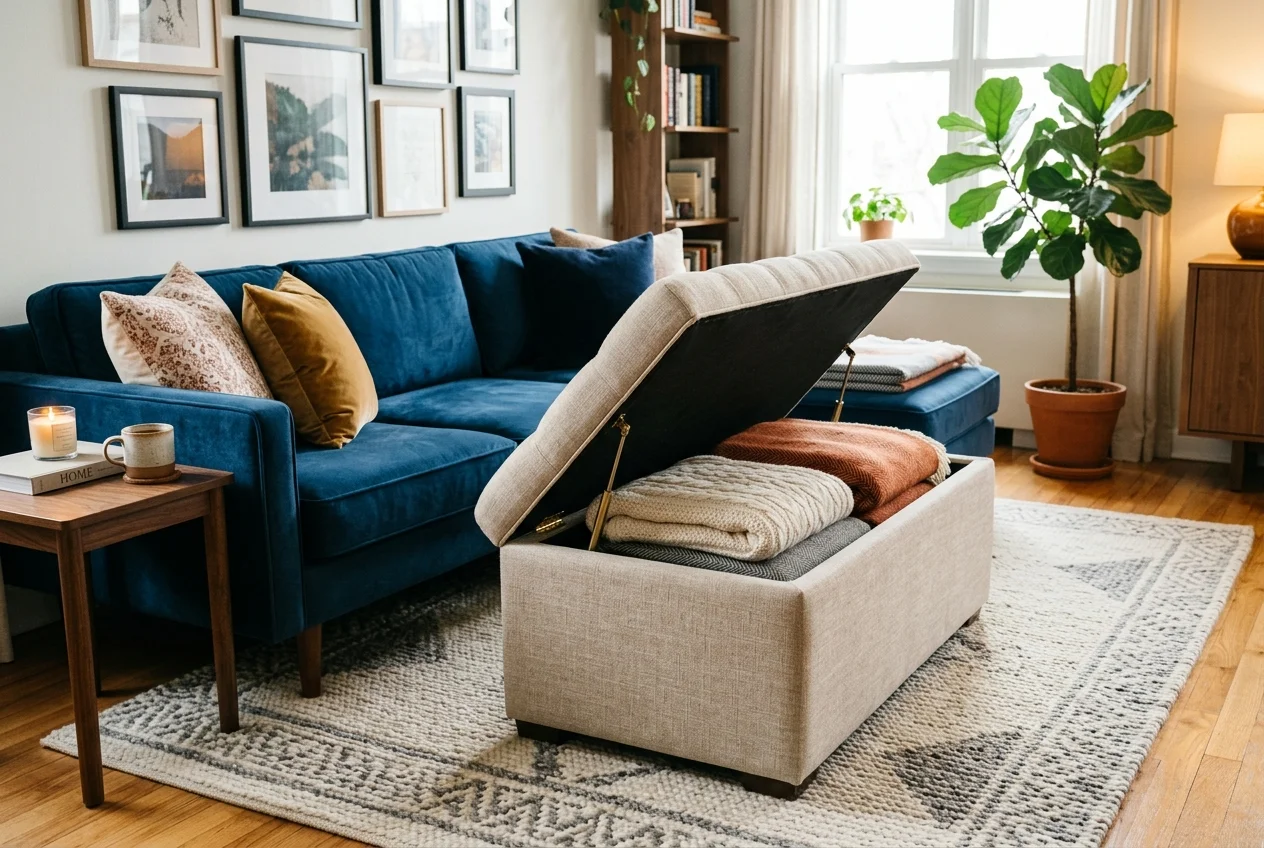
In a small apartment, one piece of furniture should ideally do more than one job. A storage ottoman can be a footrest, spare seat, soft coffee-table alternative, or a place to hide blankets without taking the footprint of a separate cabinet.
The key is choosing the right scale. An ottoman that is too large becomes an obstacle, while one that is too small may hold almost nothing and slide around the room.
Quick solution
Choose an ottoman that is at least a few inches narrower than the open space where it will live. Leave a clear path around it, confirm that the lid opens without hitting a sofa or wall, and select a firm, washable surface if it will be used every day.
When should I use one?
Storage ottomans are a good fit for studios, living rooms without a coffee table, bedrooms that need occasional seating, and entryways where a bench is useful. They are also practical for renters because they do not require installation and can move with you.
They are less useful when you need fast access to many small items. For that situation, drawers or open shelving will be easier to organize than one deep compartment.
Choosing the shape and size
| Shape | Works well in | What to check |
|---|---|---|
| Square | Beside a chair or at the end of a sofa | Corner clearance and lid access |
| Rectangular | In front of a sofa or under a window | Walking path and hinge placement |
| Bench | Entryway or foot-of-bed | Seating height and total width |
| Nesting pair | Flexible studio layouts | Whether both pieces fit when separated |
Measure the gap, then measure the ottoman again with the lid open. The second measurement is the one most product photos leave out.
10 storage ottoman options for a small apartment
Use the list below as a comparison shortlist. The SONGMICS ottoman is the lead product example; the other links open current Amazon results for different shapes and functions. Compare the closed footprint, open-lid clearance, weight rating, and return terms before buying.
| Option | Best for | What to verify |
|---|---|---|
| SONGMICS storage ottoman | Hidden storage and occasional seating | Interior size and weight rating |
| Folding storage ottoman | Furniture that stores flat | Hinge, base, and sitting limit |
| Small cube storage ottoman | Beside a chair or sofa | Lid access and corner clearance |
| Storage ottoman bench | Entryways and foot-of-bed seating | Seating height and total width |
| Round storage ottoman | Softening a tight seating layout | Diameter and lid clearance |
| Lift-top ottoman coffee table | Work, dining, and hidden storage | Top stability and open height |
| Ottoman with tray top | A coffee-table alternative | Tray size and surface finish |
| Narrow storage bench | Hallways and bedroom edges | Depth, wall clearance, and stability |
| Velvet storage ottoman | Decorative seating | Fabric care and pet resistance |
| Soft storage ottoman | Flexible family-room storage | Ventilation, edges, and load rating |
Every link is an Amazon Associates link. Prices, stock, variations, and seller information can change; Home in Layers has not personally tested these products.
Three apartment uses
- Living room: Keep throws, game controllers, and spare pillows inside. Use a tray on top if you want a stable surface for drinks.
- Bedroom: Place a low bench at the foot of the bed for folded blankets. Keep the lid clear enough to open without moving the bed.
- Entryway: Use a sturdy bench for putting on shoes, but reserve the interior for soft accessories rather than heavy tools or cleaning products.
Troubleshooting common problems
If the ottoman slides, add a low-profile rug pad beneath it rather than a thick pad that changes the height. If the lid closes unevenly, remove overstuffed contents and check that the hinge is aligned. If the fabric picks up lint, use a vacuum upholstery attachment and follow the care label before trying a cleaner.
Do not use a lightweight folding ottoman as a step stool unless the manufacturer explicitly says it is designed for that purpose. A weight rating for sitting is not automatically a weight rating for climbing.
Best practices and privacy
Group similar items in soft bins or zip pouches so the ottoman does not become a storage “black hole.” Keep personal documents, medications, and valuables somewhere more secure; a fabric ottoman is convenient concealment, not a lockbox.
For more layout help, see How to Choose a Small Sofa, Reading Nook Ideas, Living Room Layout Ideas, Small Side Tables, and the Apartment Decorating Checklist.
Takeaway
Buy the ottoman for the space it occupies, not just the storage volume it advertises. The best choice leaves a clear path, opens easily, and solves at least two real problems in the room.
Explore More on Pinterest
Save this guide to your boards or check out our daily small-space styling ideas, renter-safe DIYs, and apartment resets.