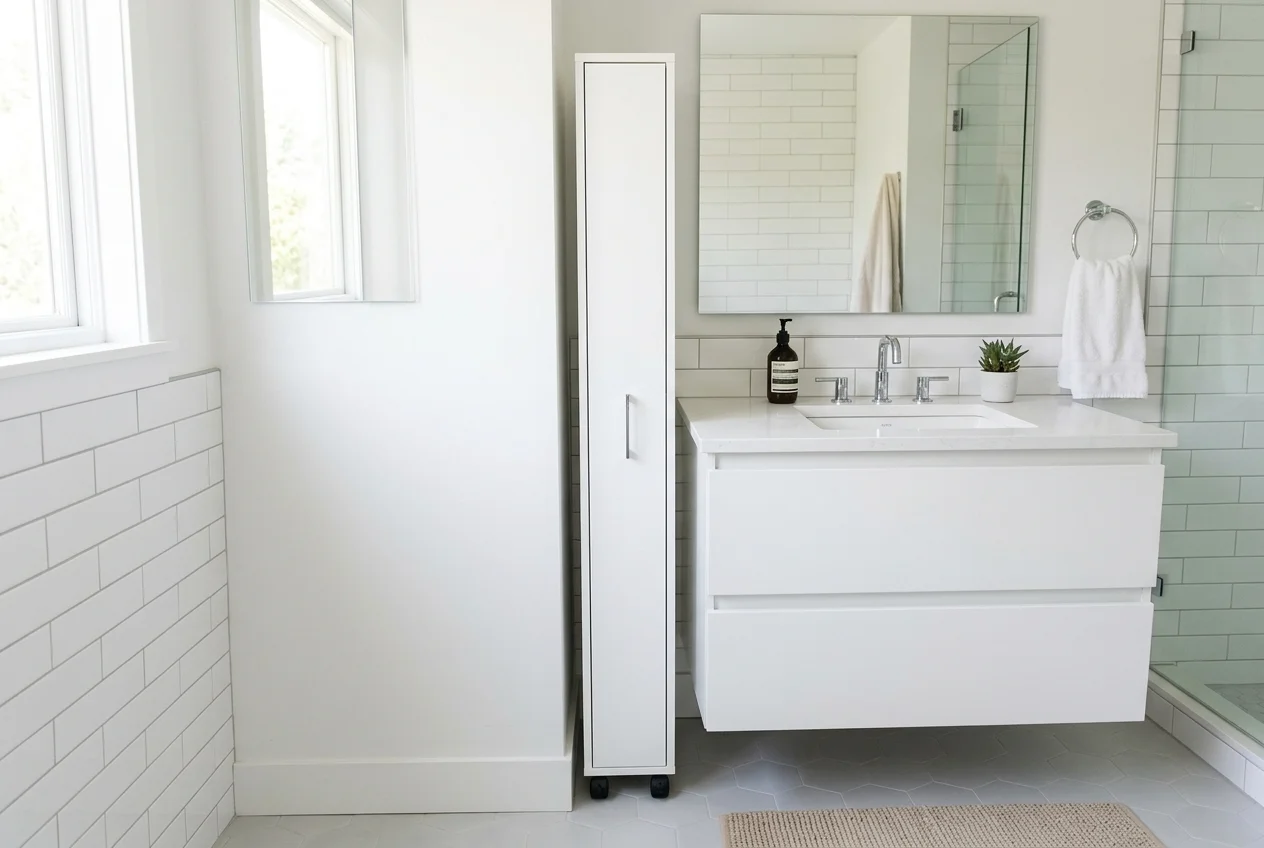
When a bathroom has only a few inches of spare floor space, a slim cabinet can be more useful than a wide vanity organizer. It hides backup supplies, creates a calmer visual field, and makes use of an awkward gap beside the toilet or sink.
The risk is buying a cabinet that technically fits but blocks cleaning, plumbing, or a door. In a tiny bathroom, the installation footprint matters as much as the storage volume.
Quick solution
Measure the gap at the floor, halfway up the wall, and at the top of the cabinet. Check the door swing and leave access to the toilet shutoff valve. Choose adjustable shelves if you store items of different heights, and keep the cabinet away from direct splash zones.
When should I use a slim cabinet?
It is useful when you want concealed storage for toilet paper, toiletries, cleaning cloths, or backup soap. It works well in powder rooms and shared bathrooms where open shelves look busy.
Choose open shelving when you need towels to dry or when the room has high humidity and weak ventilation. A closed cabinet is not a substitute for moisture control.
Measurements that prevent returns
- Measure the narrowest width, not only the baseboard width.
- Check depth at the door, toilet bowl, and plumbing connections.
- Measure the height of bottles and toilet-paper packages.
- Open the proposed doors on the floor with painter’s tape.
- Leave enough room to vacuum and wipe behind the cabinet.
10 slim bathroom cabinet options
The Spirich cabinet is the lead example for a narrow freestanding storage solution. The other links cover linen towers, toilet-paper cabinets, corner units, and wall-mounted styles. Always measure around plumbing, doors, and cleaning access.
| Option | Best for | What to verify |
|---|---|---|
| Spirich slim bathroom cabinet | Narrow enclosed storage | Width, door swing, and plumbing |
| Slim freestanding bathroom cabinet | Powder rooms and apartments | Base stability and moisture care |
| Over-toilet storage cabinet | Vertical storage above the tank | Tank clearance and anti-tip hardware |
| Narrow bathroom linen tower | Towels and backup supplies | Shelf depth and height |
| Slim toilet-paper storage cabinet | Paper goods near the toilet | Roll capacity and cleaning gap |
| Corner bathroom cabinet | Unused corners | Door clearance and corner angle |
| Wall-mounted bathroom cabinet | Freeing up floor space | Studs, anchors, and lease rules |
| Bathroom cabinet with drawers | Small toiletries and tools | Drawer travel and moisture |
| Bamboo slim bathroom cabinet | Warm, lightweight styling | Finish care and ventilation |
| Narrow powder-room cabinet | Sink-side organization | Faucet, mirror, and door clearance |
Every link is an Amazon Associates link. Confirm measurements, material, assembly, price, and availability; Home in Layers has not personally tested these products.
Organize by frequency
Put daily supplies at hand level, backups on the highest shelf, and heavier items at the bottom. Use a washable tray for bottles so a leak does not spread across the cabinet. Keep cleaning products separate from toiletries and follow all product labels.
Troubleshooting
If the door rubs, check that the cabinet is level before adjusting hinges. If the cabinet smells damp, remove wet items, improve ventilation, and follow the material-care instructions. If the floor is uneven, use only the manufacturer’s leveling method rather than improvised wedges.
Never cover a vent, electrical outlet, access panel, or plumbing shutoff with the cabinet.
Best practices and privacy
Closed storage can keep personal care products out of sight, but it should not be used as a secure place for medicines or sensitive documents. In a rental, choose a freestanding unit and avoid drilling unless the lease and landlord allow it. Keep the cabinet stable and out of the path of children or pets.
Compare it with No-Drill Bathroom Storage, Over-the-Toilet Storage, No-Drill Storage, Apartment Decorating Checklist, and Organization Systems.
Takeaway
A slim cabinet is a precision purchase. Measure the gap, door swing, plumbing access, and moisture conditions before choosing the finish or storage features.
Explore More on Pinterest
Save this guide to your boards or check out our daily small-space styling ideas, renter-safe DIYs, and apartment resets.