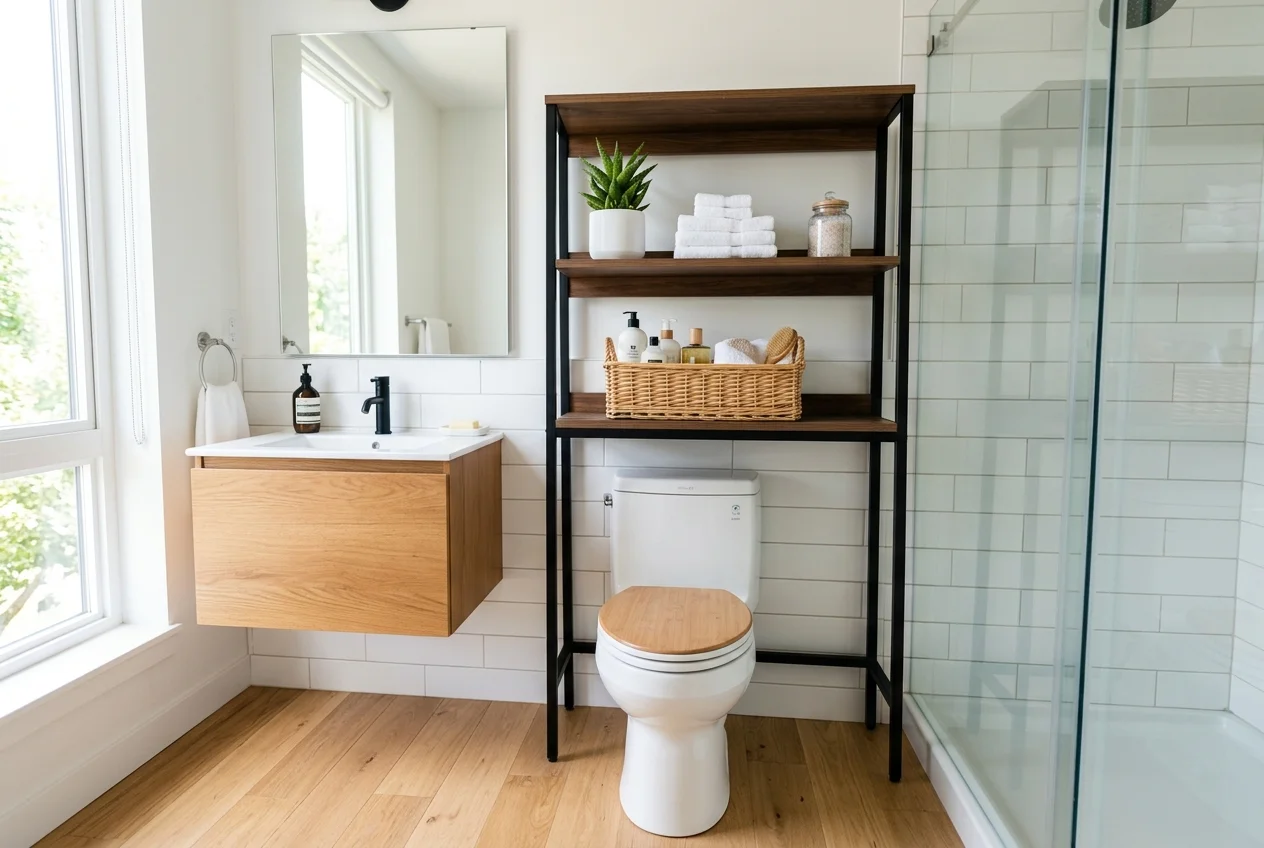
Small bathrooms rarely need more floor furniture. They need better use of vertical space. The wall above the toilet is often unused, which makes an over-the-toilet rack or cabinet one of the simplest ways to add storage without narrowing the walkway.
This guide explains how to choose a unit that fits a rental bathroom, what to measure before ordering, and which features matter more than a styled product photo.
Quick solution
Measure the available width, the distance from the floor to the top of the toilet tank, and the clearance around the flush handle. For most apartments, a narrow three-tier rack with an anti-tip option is the most flexible starting point. Choose a cabinet when visual clutter is the main problem and an open rack when you need towels and daily items within reach.
When should I use over-the-toilet storage?
It works best when the bathroom has a clear wall above the toilet, limited vanity space, and enough ceiling height for a tall unit. It is especially useful in powder rooms, shared bathrooms, and older apartments where adding built-in cabinetry is not practical.
It is not automatically the right choice for every bathroom. Avoid it if the toilet is directly under a low window, if the tank is unusually deep, or if the unit would block access to a shutoff valve or service panel.
What to measure first
- Measure the tank width at its widest point, including the flush handle.
- Measure from the floor to the highest point of the tank.
- Check the space between the toilet and the wall. Some frames need a little depth behind the tank.
- Measure the ceiling and any medicine cabinet, shelf, or window above the toilet.
- Confirm the full assembled width and depth, not just the shipping-box size.
Leave enough room to clean behind the unit. A storage rack that fits on paper but traps dust around the tank will become frustrating quickly.
Open rack versus cabinet
| Style | Best use | Main advantage | Trade-off |
|---|---|---|---|
| Open rack | Towels and baskets | Easy access and lighter appearance | Everything stays visible |
| Cabinet | Toiletries and paper goods | Hides visual clutter | More assembly and door clearance |
| Mixed shelves | Shared bathrooms | Separates daily and backup supplies | Can be taller and heavier |
10 product options for a small bathroom
These are ten ways to shop the category, organized by the job each option is meant to solve. The Kitsure rack is the lead product example from our research; the other links open current Amazon results so you can compare sizes, sellers, finishes, and availability before choosing.
| Option | Best for | What to verify |
|---|---|---|
| Kitsure 3-tier rack | Open shelves, hooks, and paper storage | Tank clearance and anti-tip setup |
| 3-tier metal over-toilet rack | Towels and baskets | Width, depth, and wobble |
| Over-toilet cabinet with doors | Hiding toiletries | Door swing and shelf height |
| Bamboo over-toilet shelf | Warm, lighter-looking decor | Moisture care and stability |
| Freestanding bathroom tower | Bathrooms without usable wall space | Floor footprint and height |
| Over-toilet shelf with towel bar | Hand towels and daily use | Bar position and cleaning access |
| Adjustable over-toilet organizer | Uneven or unusual layouts | Adjustment range and locking points |
| Narrow toilet storage cabinet | Enclosed backup supplies | Base width and door clearance |
| Over-toilet rack with baskets | Sorting shared-bathroom items | Basket dimensions and weight |
| Apartment bathroom storage shelf | Comparing budget-friendly styles | Assembly, returns, and finish |
Every link is an Amazon Associates link. Listings, prices, ratings, and availability can change; Home in Layers has not personally tested these products.
Three useful setups
- Shared bathroom: Put daily towels and a small basket on the middle shelf. Keep backup toilet paper on the highest shelf and leave the lowest shelf open for cleaning access.
- Tiny powder room: Use one attractive basket for hand towels and reserve the other shelves for spare soap and tissue. Fewer categories make the room feel calmer.
- Laundry-bathroom combination: Use labeled bins for laundry supplies, cleaning cloths, and personal-care backups. Do not store chemicals directly above the toilet where a spill would be difficult to clean.
Troubleshooting
If the rack wobbles, check that every foot is flat and that the frame is assembled in the correct orientation. If the shelves feel crowded, measure the actual bottle height before moving products into baskets. If the unit blocks the flush handle, return to the measurement step rather than forcing the handle around it.
For a rental, avoid drilling unless the lease allows it. Use only the included stability hardware as directed, and do not rely on adhesive strips to support a tall, heavily loaded cabinet unless the manufacturer specifically approves that installation.
Best practices and privacy
Keep heavy items low, place glass bottles in a contained bin, and leave access to plumbing controls. A cabinet can improve visual privacy for personal supplies, but it should never block ventilation, electrical access, or a bathroom window.
For a broader room-by-room plan, start with How to Choose Apartment Furniture, then compare No-Drill Bathroom Storage, Small Apartment Storage, and Small Rental Kitchen Storage.
Takeaway
The best over-the-toilet organizer is the one that fits the tank, leaves the flush handle clear, stays stable, and gives every shelf a specific job. Measure first, load from the bottom up, and keep the installation removable where possible.
Explore More on Pinterest
Save this guide to your boards or check out our daily small-space styling ideas, renter-safe DIYs, and apartment resets.