Quick answer
The secret to successfully mixing thrifted decor with modern apartment furniture is the 70/30 rule (70% neutral modern foundations, 30% character vintage pieces) and ensuring all items share at least one unifying element, like color or material.
Who this is for
This guide is for renters who have a baseline of affordable, modern flat-pack furniture (like IKEA or Target) but feel their apartment looks a little generic or “catalog-like.” If you want to add warmth, character, and history to your space without spending a fortune, thrifting is the answer.
What to measure first
Before you hit the thrift stores, prepare your measurements:
- Available surface area: Know the exact dimensions of your empty shelves or the top of your dresser so you don’t buy a lamp or tray that is too large.
- Wall space: Measure the gaps on your walls so you know what size frames will actually fit.
- Clearance heights: If you’re looking for a vase or a lamp for a specific shelf, know the height limit.
Best thrift categories for apartments
When adding character to a small space, focus on high-impact, low-footprint items.
- Frames and Art: Thrift stores are goldmines for unique, ornate frames. You can often discard the art inside and use the frame for your own prints or photos.
- Lamps and Lighting: Vintage brass or ceramic table lamps add instant warmth. Just be sure to check the wiring or have it rewired (it’s surprisingly cheap).
- Trays and Bowls: Catch-alls for keys, jewelry, or remotes look much better when they are heavy vintage brass or carved wood rather than cheap plastic.
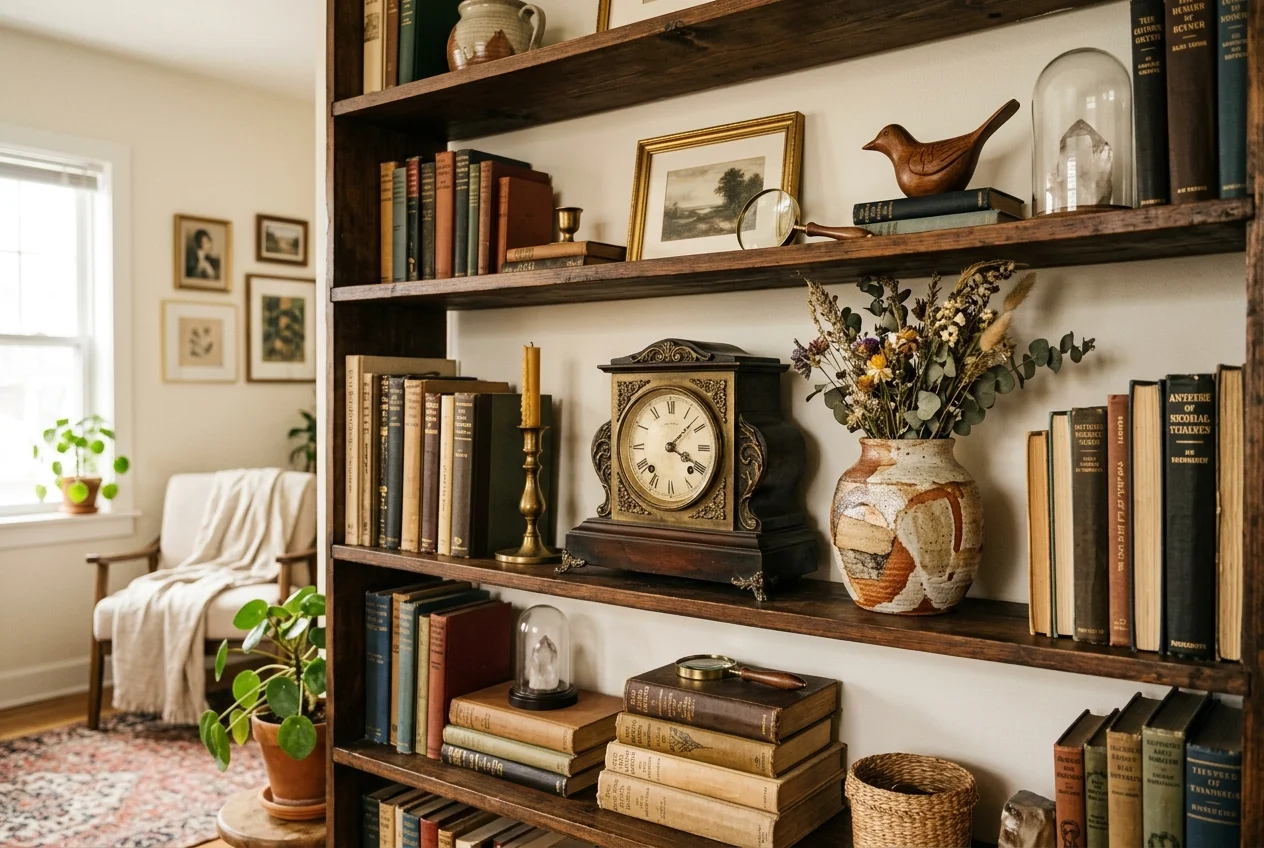
- Ceramics and Vases: A collection of mismatched vintage pottery adds texture to modern floating shelves.
- Textiles: Look for wool blankets or vintage rugs. A small vintage runner in the kitchen or bathroom elevates the whole room.
What to skip
Not everything at the thrift store is a smart buy for a renter.
- Large furniture without measuring: Never buy a large piece (like a dresser or sofa) just because it’s a good deal. If it doesn’t fit your space or through your door, it’s a wasted purchase.
- Upholstered items without inspection: Be incredibly wary of thrifted soft goods (sofas, mattresses, heavily upholstered chairs) due to the risk of bed bugs, deep-set odors, or pet dander. Stick to hard goods or items that can be easily washed or reupholstered.
- “Projects” you won’t finish: If you buy a chair that needs sanding, painting, and reupholstering, be honest about whether you have the time and space in your apartment to actually do the work.
Color/material cohesion strategies
To keep your apartment from looking like a flea market explosion, you need cohesion.
- The Unifying Thread: Ensure your thrifted items share a color palette with your modern furniture. If your modern sofa is navy, look for thrifted art or ceramics with hints of blue.
- Wood tones: Mixing wood tones is okay, but try to keep them in the same temperature family (e.g., all warm tones like walnut and cherry, or all cool tones like ash and gray-washed oak).
- Metals: Stick to one dominant metal for your thrifted finds (like brass or chrome) to create a deliberate collection rather than a random assortment.
The 70/30 rule
For a balanced look, aim for a ratio of roughly 70% modern/new items and 30% vintage/thrifted items.
- The 70% modern (your sofa, bed frame, simple shelving) provides a clean, functional foundation.
- The 30% thrifted (your lamps, art, side tables, rugs) provides the personality and prevents the space from feeling sterile.
Cleaning and prepping thrifted items
Always clean thrifted items thoroughly before integrating them into your apartment.
- Wood: Wipe down with Murphy Oil Soap to remove years of grime, then treat with a wood conditioner or wax.
- Brass and Metals: Use Brasso or a mixture of baking soda and lemon juice to restore shine, or leave the patina if you prefer a weathered look.
- Textiles: Take rugs to a professional cleaner or use a carpet cleaner. Wash blankets in hot water if the fabric allows.
- Glass/Ceramics: A run through the dishwasher or a soak in warm soapy water usually does the trick.
Where to thrift
- Goodwill and Salvation Army: Best for basics, frames, and cheap ceramics. Hit or miss for furniture.
- Estate Sales: Incredible for high-quality, well-cared-for furniture and unique art. Go on the last day for the best prices.
- Facebook Marketplace: Great for targeted searching (e.g., “mid-century lamp”) but requires patience and negotiation.
- Habitat for Humanity ReStore: Excellent for lamps, mirrors, and sometimes small furniture pieces.
Renter-safe cautions
- If you thrift heavy vintage art or mirrors, do not hang them with Command Strips. You must use proper wall anchors (which will leave holes you need to patch later) or simply lean them securely against the wall on a dresser or floor.
- Ensure old lamps don’t have frayed wiring that could be a fire hazard.
Budget alternatives
- Under $25: A collection of vintage brass candlesticks or a unique ceramic vase to style a coffee table.
- Under $50: A vintage gallery wall made of thrifted frames (fill them with cheap digital prints).
- Under $100: A small vintage side table or a statement lamp to flank your modern sofa.
Common mistakes
- Cluttering instead of curating: Buying too many small thrifted items makes a small apartment look messy. Focus on a few standout pieces.
- Ignoring scale: A massive ornate mirror will overpower a delicate, modern entryway table. Ensure the scale of the vintage pieces matches your modern furniture.
- Forgetting to check for damage: Always inspect closely for cracks, wobbly legs, or missing parts before buying.
- Impulse buying: Just because it’s $5 doesn’t mean you need it.
Recommended product
For adding a vintage accent without committing to permanent changes, this Laatse Peel and Stick Wallpaper in Botanical print is a relevant product starting point. Confirm the roll dimensions, adhesive surface compatibility, removal instructions, seller, price, and return terms before ordering. Home in Layers has not personally tested this product.
View the Laatse Peel and Stick Wallpaper on Amazon (affiliate link)
Related Home in Layers articles
- Apartment Decorating Checklist
- How to Hang Wall Decor Without Nails
- Decorating a Rental Without Damage
- How to Choose Apartment Furniture
- Small Apartment Lighting Guide
Takeaway
Thrifting is the most affordable way to inject soul into a generic apartment; just remember to edit ruthlessly so your modern space feels curated, not cluttered.
Explore More on Pinterest
Save this guide to your boards or check out our daily small-space styling ideas, renter-safe DIYs, and apartment resets.