The problem
A balcony is a huge perk for any apartment, but if it faces a busy street or looks directly into your neighbor’s living room, you probably won’t use it. Traditional privacy solutions often involve drilling into exterior walls or permanently altering railings—both huge red flags for landlords. Renters need solutions that provide immediate privacy without putting their security deposit at risk.
What to measure
Before purchasing any balcony privacy solution, get precise measurements:
- Railing length and height: Essential if you are buying faux ivy or privacy screens that attach with zip ties.
- Floor to ceiling height: If you plan on using tension rods for curtains.
- Wind exposure: While not a measurement, note how windy your balcony gets. High winds will easily topple freestanding screens or lightweight plants.
Comparison table
| Option | Best for | Watch out for |
|---|---|---|
| Freestanding Screen | Immediate, movable privacy | Getting knocked over by high winds; footprint size |
| Tension-rod Curtains | Creating a cozy, indoor-outdoor feel | Ensuring the tension rod is fully secure; mold on fabric |
| Tall Planter Row | Natural look, plant lovers | Total weight limits on the balcony; watering drainage |
| Privacy Film/Faux Ivy | Attaching directly to existing railing | Building HOA/landlord policies on exterior appearance |
| Bamboo Roll-up Shade | Adjustable sun and sightline blocking | Finding a secure, drill-free way to hang them |
Best option for different renters
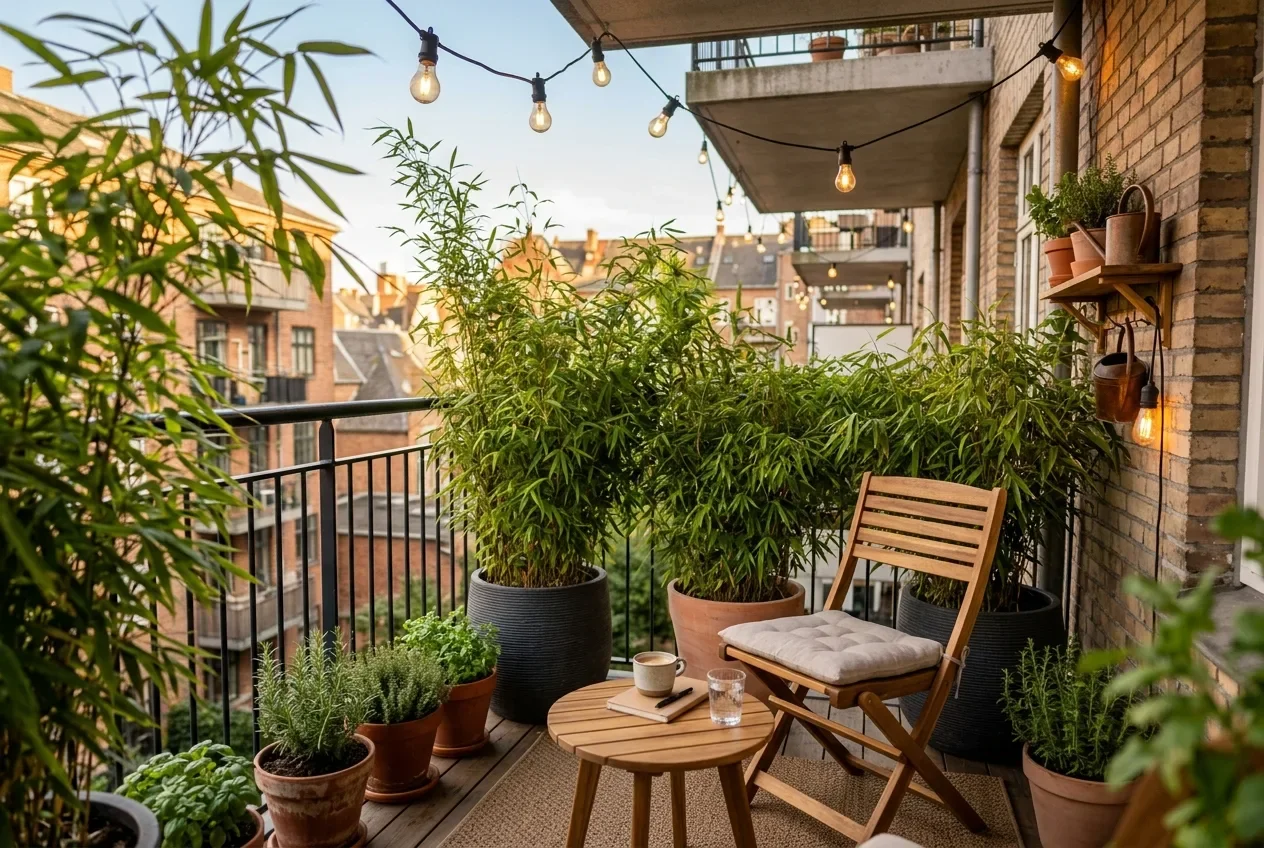
For the high-rise renter: A row of tall planters with heavy bases. High winds make freestanding screens and curtains a hazard, but a sturdy row of snake plants or bamboo in heavy fiberglass planters can withstand the gusts while blocking the view.
For the first-floor renter near a street: Faux ivy or a mesh privacy screen attached directly to the railing with zip-ties. It obscures the view from the street level while still allowing airflow and some light.
For the renter with an overhang/covered balcony: Outdoor curtains on a heavy-duty tension rod. This turns a concrete box into an outdoor living room, and the curtains can be drawn closed when you want total seclusion.
Pros and limitations
Removable privacy screens and curtains are inexpensive and fast to set up. However, they are highly susceptible to weather. A sudden storm can send a lightweight freestanding screen crashing down. Plant-based privacy looks the best and feels the most natural, but requires ongoing maintenance and can become very heavy when the soil is saturated with water.
What to avoid
Avoid any solution that requires drilling into the exterior stucco, brick, or siding. Also, avoid lightweight plastic screens if you live in a windy area. Finally, don’t buy permanent exterior paint to frosted glass railings without written permission from your landlord.
Renter-safe cautions
- HOA and Building Policies: Many buildings have strict rules about what can be visible from the street. Always check your lease before zip-tying neon green faux ivy to your railing.
- Weight Limits: Balconies have structural weight limits. Do not overload them with massive, soil-filled concrete planters.
- Attachment: Use zip ties, velcro straps, or tension rods. Never use screws, nails, or permanent adhesives on exterior surfaces.
Budget alternatives
- Under $30: Fabric privacy screens or faux ivy rolls that attach to your existing railing with zip ties.
- Under $75: A heavy-duty outdoor tension rod and a set of weather-resistant outdoor curtains.
- Under $150: A multi-panel freestanding wooden or metal privacy screen, or a set of tall, narrow fiberglass planters.
Recommended product
For a balcony that needs visual separation, the SUNNY GUARD Balcony Privacy Screen Cover is a relevant product starting point. Confirm the screen dimensions, railing attachment method, wind exposure, color, seller, price, and return terms before ordering. Home in Layers has not personally tested this product.
View the SUNNY GUARD Privacy Screen on Amazon (affiliate link)
Related Home in Layers articles
- Balcony Decorating Ideas
- Curtains for Renters
- Decorating a Rental Without Damage
- Apartment Decorating Checklist
- How to Choose an Apartment Rug
Takeaway
You don’t need to drill holes to block out the world; with the right tension rod, zip-ties, or heavy planters, you can turn an exposed balcony into a private oasis.
Explore More on Pinterest
Save this guide to your boards or check out our daily small-space styling ideas, renter-safe DIYs, and apartment resets.